Young Leaders Award – Redcar & Cleveland College
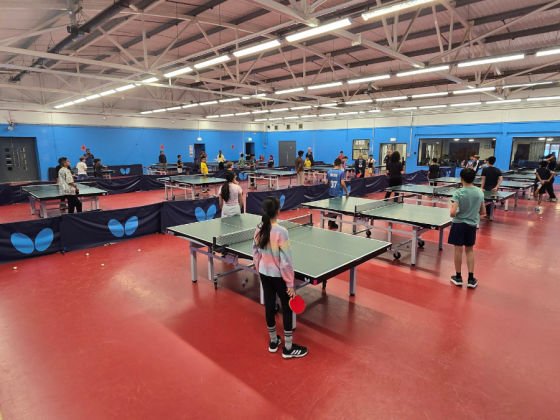
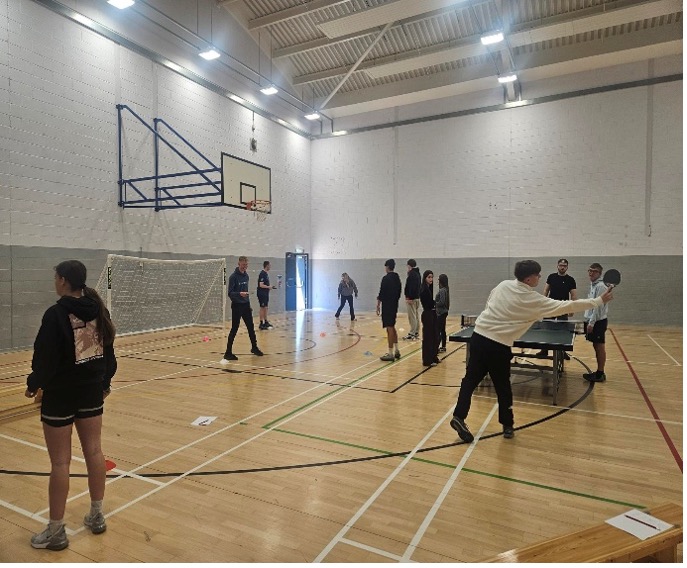
Later in the month, Steven Brunskill delivered two Table Tennis England Young Leaders Award pilot sessions at Redcar & Cleveland College.
The pilot programme was delivered to help support Lauren Evans, the Northeast Area Manager. The pilot scheme was designed to test and explore how young leadership development could be integrated into educational settings.
The sessions took place within the college sports hall using eight tables and involved 14 students, all of whom successfully completed the programme. The course included:
- Leadership skills
- Communication and organisation
- Running small games and activities
- Festival delivery ideas
- Practical coaching activities
The content was adapted slightly to fit the college curriculum and linked directly into future opportunities where students will help support primary school festivals.
The feedback from both students and staff was extremely positive. Graham Timms, the course tutor, was particularly pleased with the programme and expressed interest in running the course annually moving forward, alongside future support for local school festivals.
Ormesby Table Tennis Club Visit – Performance Development Centre
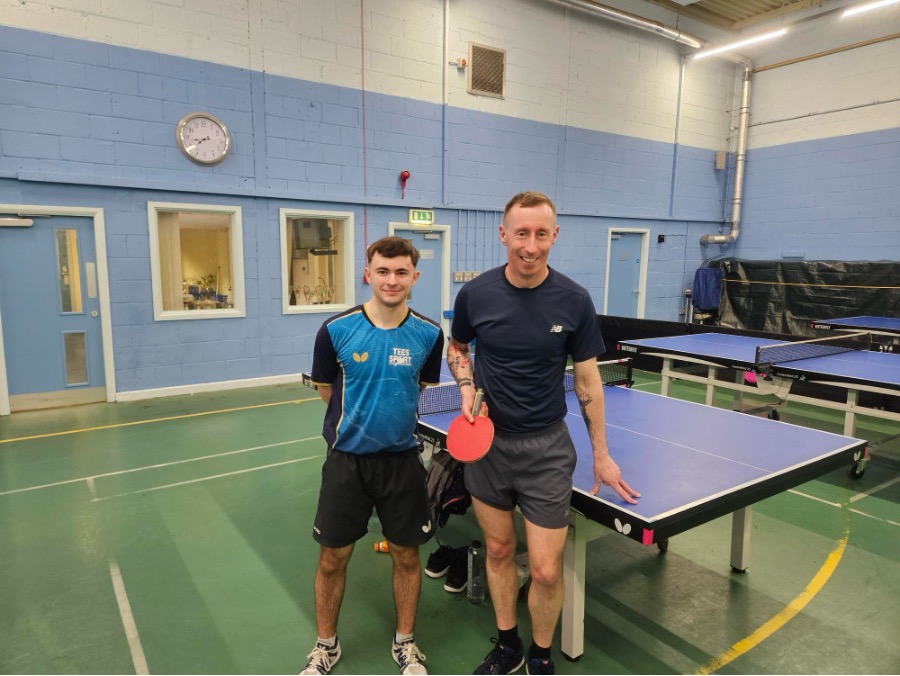
During April, Steve Brunskill also visited Ormesby Table Tennis Club, one of Table Tennis England’s Performance Development Centres (PDCs) and historically one of the most respected clubs in England.
The club continues to build strongly under the leadership of Carol Moore, with additional support now being provided by Dennis Neale and Dan Dodds. The overall training environment was extremely positive and it was clear to see significant improvements in the players. The standards across sessions were noticeably higher, with players working hard, showing strong focus, and giving maximum effort throughout.
Former top-level player Steve Bailey has now taken a leading role coaching a small group of highly committed performance players and ex-juniors who remain focused on improvement and competitive development. Steve brings a huge amount of experience and knowledge to the role, having worked closely with Paul Drinkhall over many years.
Club Support Visit – Swerve Table Tennis Club
A development support visit also took place at Swerve Table Tennis Club in Middlesbrough as part of ongoing work to help clubs reflect on their current provision and identify areas for future growth.
The visit provided an opportunity to observe different sessions across the day and discuss:
- Club development opportunities
- Club structure and organisation
- Player pathway progression
- Creating sustainable club environments
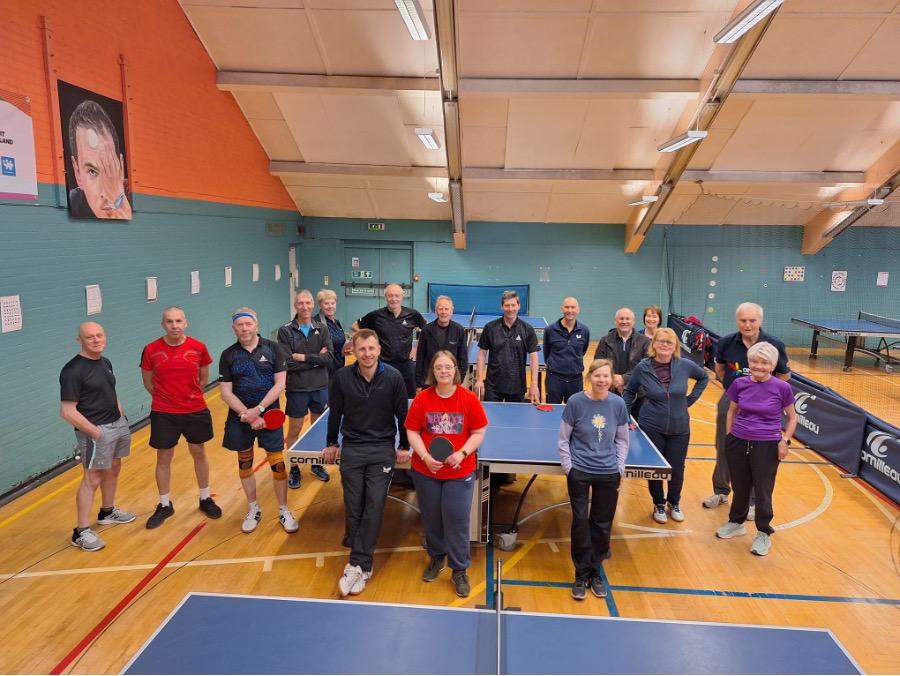
One particularly positive aspect of the visit was observing the thriving 50+ session, which involved around 30 adult participants in a highly inclusive environment. The session included several players with disabilities and created a welcoming, social, and enjoyable atmosphere for all involved.
The club’s new Polish coach, Michael, brought huge energy and enthusiasm to the session and demonstrated excellent people skills throughout. His positivity and engagement with players helped create a fantastic environment and the session was very well received by everyone attending.
Junior and adult sessions also took place later in the day. While the evening adult numbers were smaller, the overall atmosphere remained positive and enjoyable, with clear ambition from the club to continue improving standards and growing participation in the future.
Cippenham TTC: A thriving volunteerled hub for junior development
Aad’s visit to Cippenham Table Tennis Club on 20 April highlighted a vibrant, well structured environment driven by committed volunteers and a clear focus on junior progression. Operating from its own purposebuilt venue at The Westgate School site, the club runs an impressive programme, 15 tables on the night, with strong attendance and a welcoming atmosphere.
The early evening had both a beginner and intermediate session. It was supported by three enthusiastic parents who acted as feeders for the beginners. This was followed by a high-energy advanced group, demonstrating the depth of the club’s junior pathway. Cippenham’s track record in developing young players is well known, with former members including Gavin Evans and Rachael Iles.
The club is entirely volunteer run, with experienced coaches Ken Phillips, Tim Kiteley, and Jan Chapman leading delivery. Head coach Ken is keen get some of the the parent feeders on the new Coaching Assistant course. His commitment to growing internal coaching capacity is a real strength.
Cippenham’s weekly calendar is packed, from beginner and advanced coaching to elite sessions and Maidenhead League fixtures. Affordable termbased fees and a friendly signin system help maintain accessibility for families.
Overall, the visit showcased a club with strong values, a clear development philosophy, and a community driven approach that continues to create opportunities for young players to thrive.
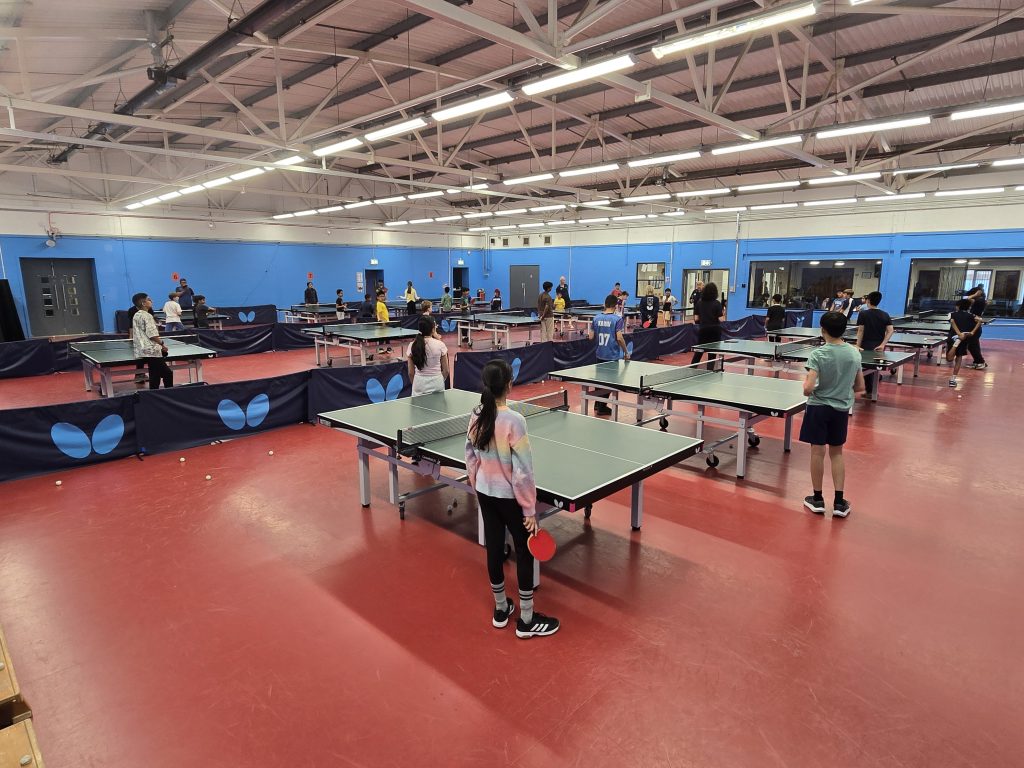
Coaches, Community and Young Talent Drive Ellenborough TTC Forward
Ellenborough Table Tennis Club in Enfield remains one of the region’s most established and community‑driven table tennis centres. Located on Craddock Road, the club offers a high‑quality facility with multiple tables, good accessibility, and a consistently busy weekly programme that supports players of all ages and standards.
During my visit, I observed a lively and well‑organised coaching environment led by Head Coach Anatol Gasiorowski, supported by coach Colette Neenan. Colette, who has taken part in Table Tennis England’s SHEcoaches Female Talent & Performance Coach Development Programme, brings a high‑energy, enthusiastic style to her sessions and engages confidently with young players. Anatol provides a complementary approach, working with a more analytical and technical focus. He used an app to record match results at the end of the session, producing an internal ranking that helps players monitor their progress. On the evening of my visit, these matches formed part of the squad’s preparation for the upcoming U10–U13 Nationals, where Ellenborough had several players competing.
The club operates a clear junior pathway, including TT Kidz, Squad, and Elite groups, each with defined expectations around attendance, commitment, and progression. This sits within a broader club philosophy centred on inclusivity, volunteer leadership, and long‑term player development. With strong junior participation, an active veterans’ community, and recent achievements in the British Clubs League, Ellenborough TTC demonstrates the culture, structure, and ambition needed to support future coach development initiatives.
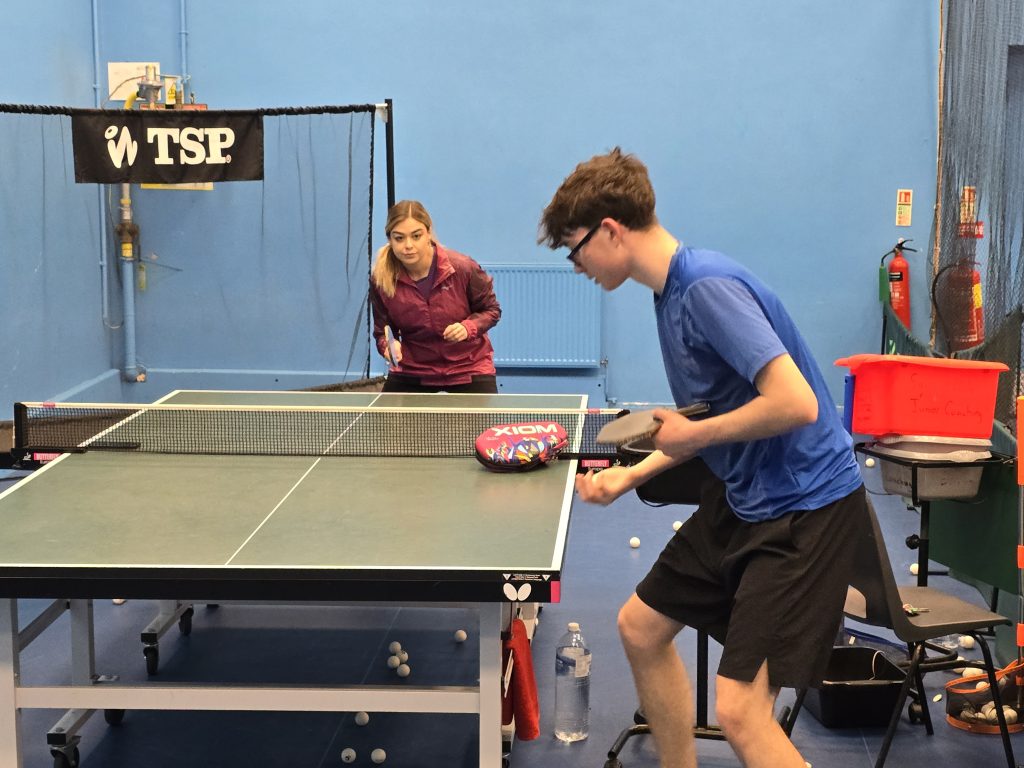
Working with Different Groups and Abilities – workshop highlights & why you should join the next one
Coaches from across the country joined our Working with Different Groups and Abilities online workshop on 17th April, an evening packed with practical ideas, shared experiences, and lively discussion. The session, led by Aad Kwakkelstein and supported by Steve Brunskill, focused on one core message echoed in the slide deck: mixed ability groups are normal — the challenge is adaptation, not perfection.
Coaches began by identifying what makes mixed groups tricky: weaker players struggling to feed stronger ones, wide variations in learning speed, juniors and seniors reluctant to mix, and the constant pressure to “meet everyone’s needs.” As one coach put it during the discussion, “Most people want to play up, not down.”
From there, the workshop introduced the Three Layers of Adaptable Coaching:
• Session Design – using stations, rotations, challenge ladders and self-paced tasks to create flexible structures when you don’t know who will walk through the door.
• Group Management – pairing strategies, clear roles (feeder, scorer, observer), tempo control, and simple cues like freeze to keep sessions flowing.
• STEP Model (Space, Task, Equipment, People) – the practical toolkit coaches loved most. From narrowing the table with a towel to adjusting scoring, using slower balls, or rotating partners, STEP gave coaches four simple levers to adapt any activity instantly.
The real energy came from the coach contributions. Ideas ranged from using multi-ball to support beginners, to rotating players more frequently, to letting players experience different rubbers so they learn to handle pimples and anti-spin. One coach shared, “I sit in a chair myself to understand what my wheelchair player experiences.” These exchanges turned the workshop into a genuine learning community.
The takeaway was clear: small changes create big improvements, and confidence grows when coaches have options.