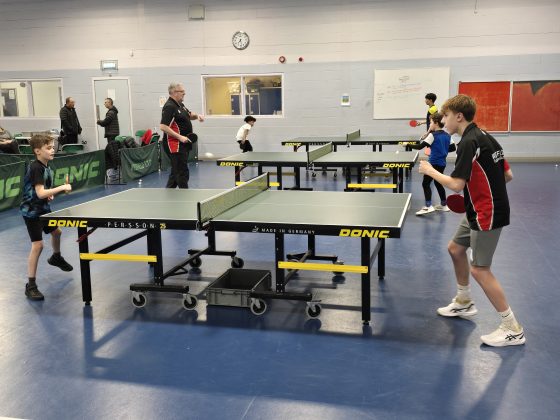
From overseas coaching conferences, implementing centres of excellence in Leeds, and visiting a number of clubs located all over the country, find out what Steve and Aad have been up to as 2026 got off to a busy start for the Table Tennis England Coach Development Team.
German innovation in table tennis coaching: Insights from the 2025 Trainertagung
Aad Kwakkelstein had the privilege of representing the Coach Development Team at the German Table Tennis National Conference for full-time coaches (Trainertagung), in Düsseldorf in late December, thanks to an invitation from the German Federation. Over two action-packed days, with more than 30 full-time coaches, including some of the German national coaching team, the conference was a vibrant exchange of ideas, research and practical techniques designed to elevate the sport across Europe.
A highlight of the conference was the presentation by Dr Peter Frei and Lennart Wehking, whose findings from the Research and Education in Competition Coaching project is setting new benchmarks for match preparation and in-game strategy. Analysing over 200 match time-outs and intervals, they advocated for coaching frameworks that go far beyond traditional instruction, focusing instead on collaborative dialogue and shared understanding between coach and athlete.
Coaches were encouraged to master simultaneous observation, evaluation and problem-solving for swift tactical adjustments. Understanding both their player’s and the opponent’s viewpoints proved vital during tactical discussions. Participatory coaching was highlighted, where the shift towards engaging players through strategic questioning, rather than one-way commands, was emphasised. Pro-retro integration, included linking retrospective analysis with forward-looking action plans rounded out the new coaching paradigm.
These insights highlighted the need for coaches to move beyond basic “sender-receiver” communication, instead cultivating an environment for meaningful, two-way dialogue.
Another standout session was led by Marco Schmitt, who introduced neuro-athletic training methods that harness brain-based techniques, particularly those targeting the vestibular system to enhance movement quality and spatial awareness. The assessment-drill-reassessment cycle, featuring specific protocols for head rotation, horizontal acceleration, and vertical movement, provided practical tools for coaches to address performance barriers such as backhand positioning.
Coaches learned that individual movement patterns require personalised assessment and targeted interventions for optimal results, making the approach both innovative and highly adaptable.
The Trainertagung made it clear that coaching excellence today is rooted in the seamless integration of scientific research and real-world practice. Evidence-based competition coaching and neuro-athletic training are now vital components of a modern coaching toolkit, promising both immediate performance gains and sustainable long-term development.
These methodologies, structured interval management, strategic questioning, and neuro-athletic assessment, are ready to be adapted by coaches of all levels. A fantastic opportunity, with thanks to German Federation to learn and share, and the team now look forward to bringing these transformative insights to the English coaching community.
Paragon TTC – a Cambridge club with Hungarian flair
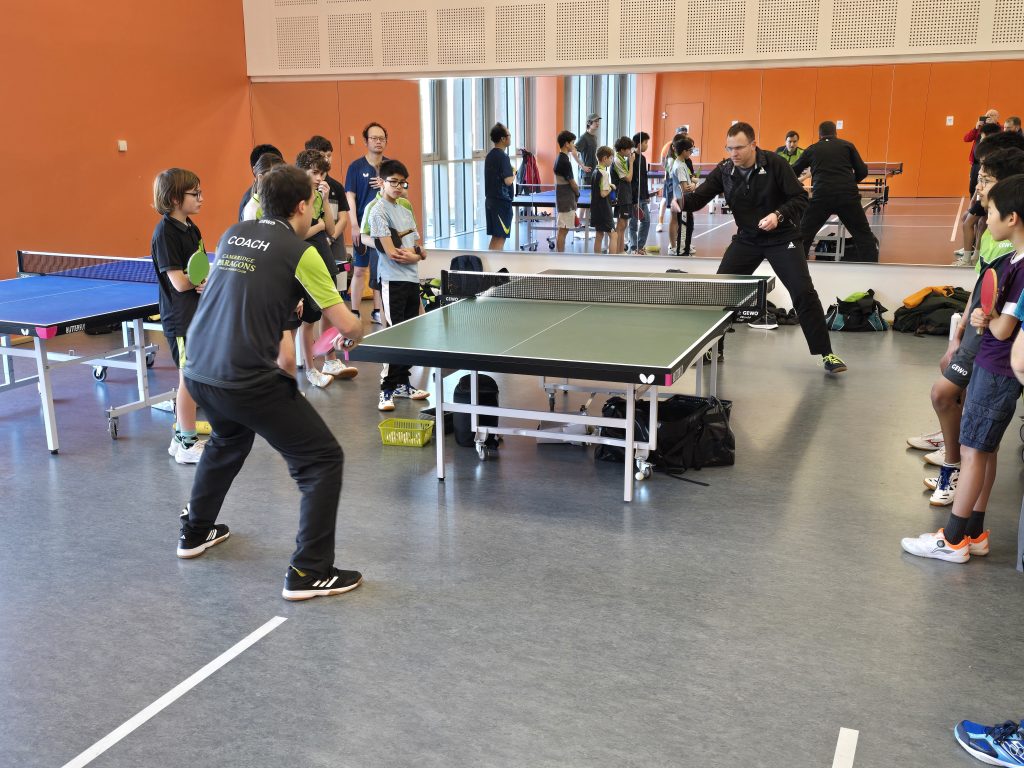
Aad travelled to Paragon Table Tennis Club in Cambridge for a morning session, led by Ferenc Horváth, the club’s head coach and driving force. It was clear that Paragon has built a culture of clarity and high‑quality coaching. The players in attendance were a mixture of juniors and seniors, creating a dynamic and inclusive environment.
Ferenc led the session with Adam Fuzes, two top veteran experts, together they delivered a well‑structured morning of training. Both coaches share a Hungarian background, and their coaching style reflected that heritage: clear demonstrations, purposeful drills, and a strong emphasis on technical detail. Every exercise had a clear intention and players responded with focus and enthusiasm. It was particularly good to see during the demonstrations that attention was not only given to the side spinning the ball, but also to the side blocking, as blocking is a crucial part of the game. This aspect was demonstrated effectively by Ferenc and Adam, highlighting the importance of both attacking and defensive skills.
The hall was full, with all ten tables occupied, creating a lively but well‑managed training environment. Despite the intensity, the atmosphere remained positive and supportive — a testament to the coaches’ ability to set high standards while keeping players engaged and motivated.
What stood out at Paragon was the consistency of the session. From warm‑up to final exercises and top-table matches, everything flowed. The players knew what was expected, the coaches communicated with clarity, and the overall structure made the session feel both professional and enjoyable.
Ferenc’s leadership is clearly central to the club’s identity. His passion for coaching, combined with Adam’s complementary style, creates a strong foundation for player development. Paragon is a club with ambition, but also one that understands the importance of doing the basics exceptionally well.
Joint education and table tennis event – Redcar
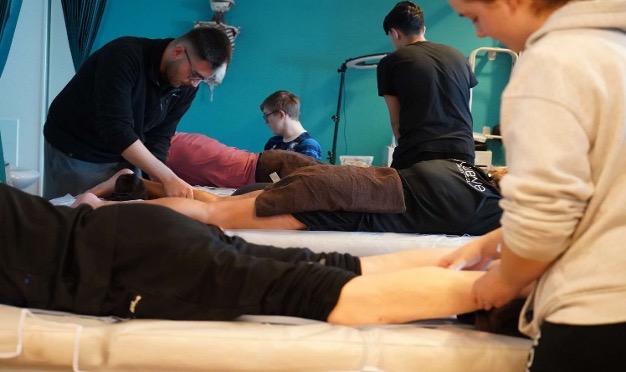
The month began for Steve with a unique joint education and table tennis event at Redcar and Cleveland College, bringing together sports therapy students and local adult community table tennis players.
Sixteen local players took part in the session, with the group split in half:
- One group playing table tennis in the main sports hall
- The other receiving massage or treatment from the sports therapy students
The groups then switched, allowing all players and students to experience both elements of the session. All activity was carried out under the watchful eye of the students’ tutor, Graham Timms, and Sports Lecturer and Physio, Dave Veitch, at Redcar College.
Graham commented that the session provided fantastic real-world experience for the students and has already made a significant difference to their progression. This was the first time students had worked with real clients, making the session particularly valuable. A second session is already planned.
Westfield TTC – A progressive hub for player and coach development
Westfield Table Tennis Club, based at Weavers Leisure Centre, is recognised as one of Northamptonshire’s most forward-thinking community clubs and is a Table Tennis England Premier Club with a commitment to player and coach development. The club welcomes over a hundred members, from beginners to British Clubs Leagues competitors, and offers weekly junior sessions at various levels.
The welcoming atmosphere and professionalism of the coaching team stand out. With four UKCC Level 2 coaches, several Level 1 coaches, and committed volunteers, Westfield encourages members to pursue umpire and coaching qualifications, offering both practical and financial support. Club coach, Kevin Bird, shared that three juniors are already keen to enrol on the Coaching Assistant course, highlighting a promising pipeline for future coaches, from Westfield.
Kevin’s progressive coaching approach delivered a session themed around change of direction, beginning with forehand parallel play before introducing switches to the diagonal. Cones were used effectively as visual targets, and model demonstrations helped reinforce key technical points.
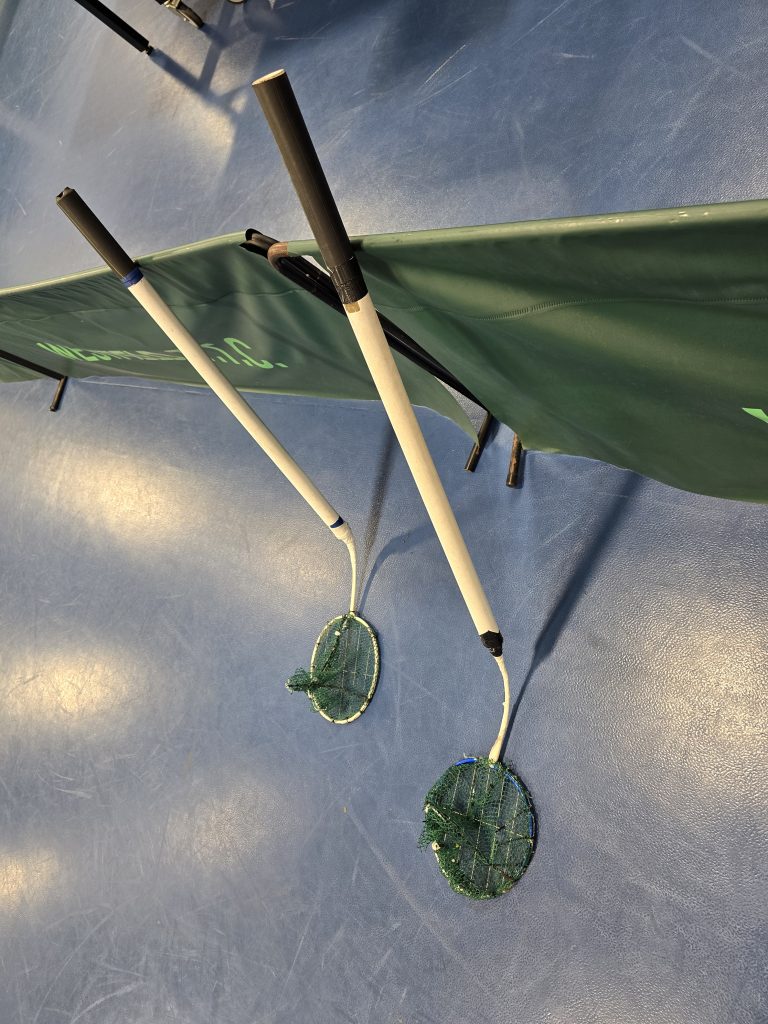
Another notable feature of the sessions was the club’s resourceful approach to equipment. To aid in the inevitable ball collection during drills, Westfield TTC has fashioned ball collection nets from repurposed old badminton racquets. These homemade nets proved remarkably effective and efficient, allowing players to swiftly gather balls between exercises. Not only is this solution practical, but it also demonstrates the club’s ingenuity.
With its forward-thinking approach, involvement in TT Kidz, and investment in coach development, Westfield exemplifies how a community club can foster an environment where both players and coaches flourish.
CATCH Community – Leeds
Steve and the team then travelled to CATCH Community for a productive meeting with Peter Thompson (Ping Pong Pete), alongside representatives from the local council and sports development department. Peter shared his ambition to create a centre of excellence and to introduce targeted table tennis programmes in schools across the Leeds area, opening up exciting future opportunities for collaboration and growth within the community.
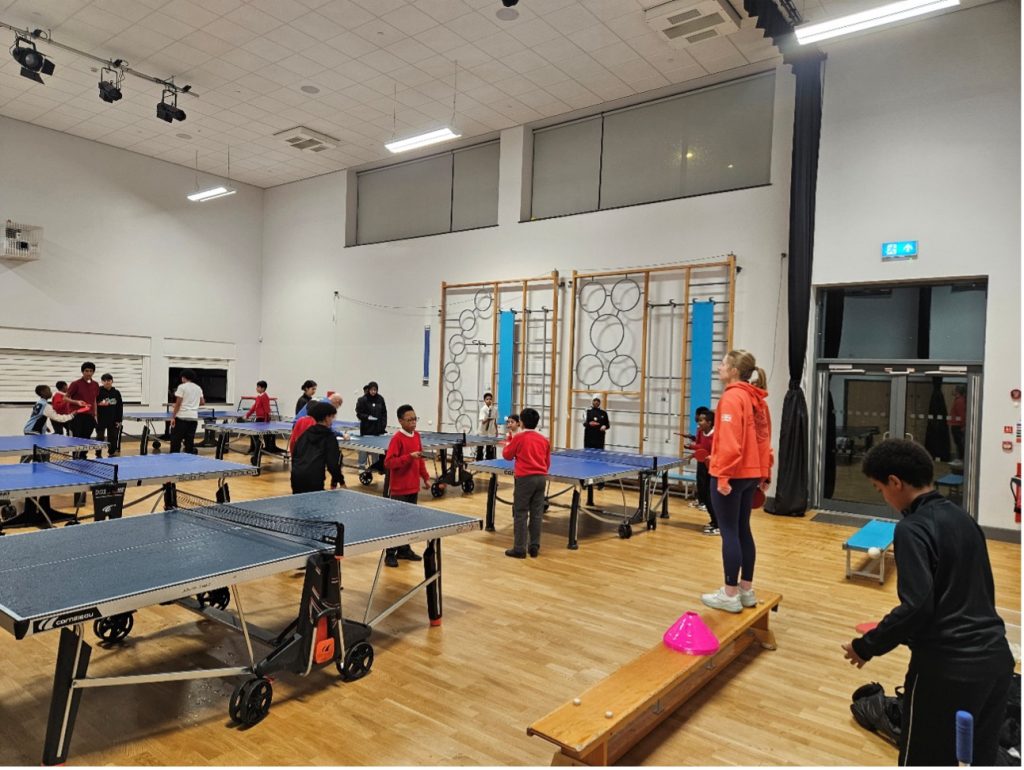
Joined by Area Manager, Lauren Evans, they visited Shakespeare Primary School to watch Peter run one of his after-school clubs. With almost 30 primary aged children all showing wonderful skills and so much ability in one hall, Lauren couldn’t believe the level of play throughout. The children loved performing the drills Peter and Lauren set. The children were all very enthusiastic, respectful and polite, a real credit to the school and Peter. It will be a great move to create a centre of excellence here, so the children have the ability to progress even further.
Club visit – Byng Hall TTC
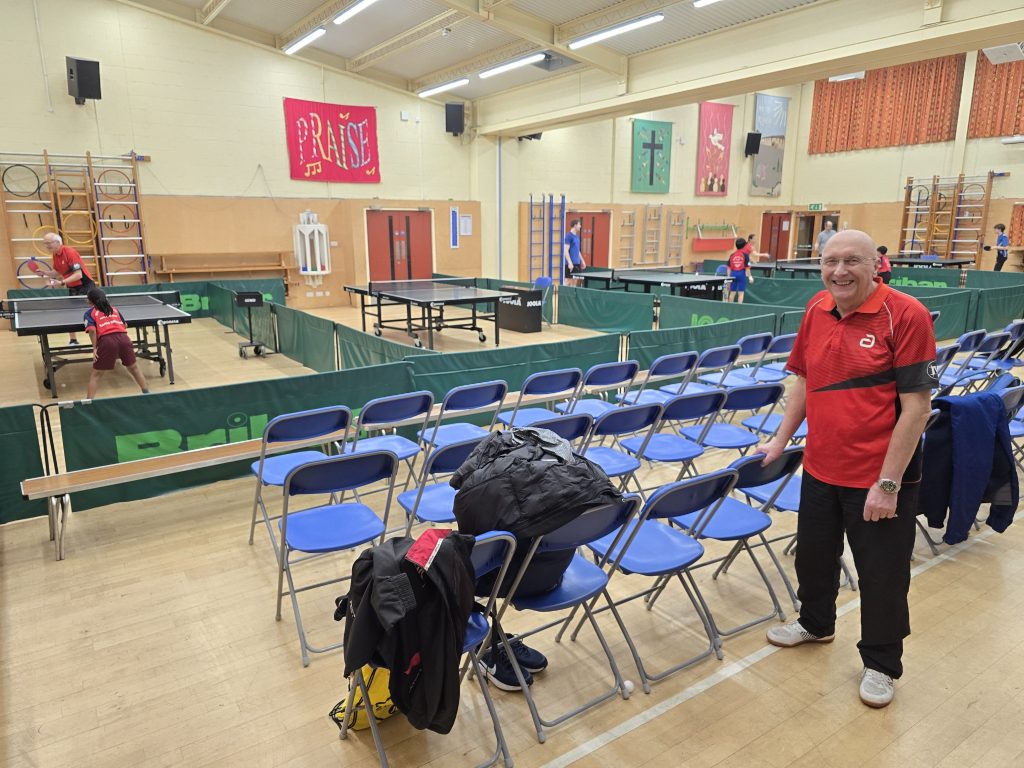
Aad’s second club visit of 2026 took him to Byng Hall Table Tennis Club in Tunbridge Wells, a club renowned for its rich tradition of nurturing players and fostering a strong sense of community. He attended a Friday evening session, thoughtfully organised to prepare players for upcoming competitions, including the Junior British Clubs Leagues, which Byng Hall was set to host over the weekend. Several players were also gearing up for the final National Series event in Grantham.
A real highlight of the visit was an engaging and insightful conversation with Gary Howes BEM, whose extensive knowledge of the club’s history, structure and ethos proved invaluable. Gary spoke with great enthusiasm about Byng Hall’s dedication to long‑term player development and the supportive environment they have cultivated for young athletes. One notable alumnus is Will Bayley MBE, whose journey from Byng Hall to Paralympic gold medallist and elite status exemplifies the club’s ability to guide talent from grassroots to the highest levels.
On the training floor, Aad was able to observe an especially promising young player: Tanvi, who was due to attend the ‘One to Watch’ camp organised by Table Tennis England. It was not just her focus and intensity that impressed, but also her infectious smile, where she clearly relished every moment of the session. Tanvi was working closely with Mark Romano, who was preparing her for the challenges ahead, while Anthony Davies led a group of players on the adjacent tables, ensuring the session was both productive and well-coordinated.
What left the deepest impression was the club’s ability to strike a balance between ambition and warmth. Byng Hall TTC in Tunbridge Wells is clearly committed to player development, but this is always underpinned by a genuine sense of care and pride. The coaches, players, and volunteers together create an environment where young athletes can flourish.
Final Level 1 assessments – Keighley
The final delivery of the old Level 1 coaching qualification assessments was delivered at Keighley Table Tennis Club. Ten learners successfully completed their assessments, marking the end of an era as the system transitions into the new coaching qualifications. A big thank you to all learners involved and to Keighley Table Tennis Club for hosting the course.
Latest news
- From the Archives
- British Clubs Leagues
Meet the eight teams going for Premier Division glory in 2026/27
- WTT events