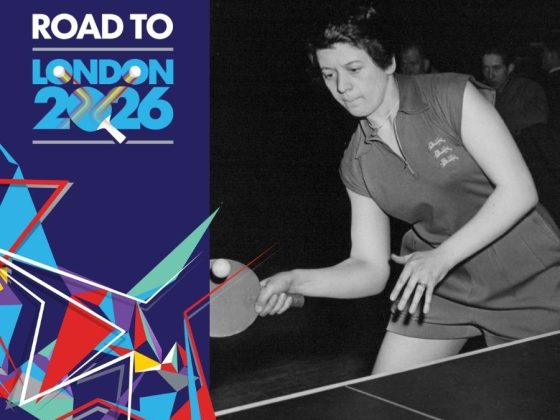
Growing up with a mother who won five World Championships medals, you might imagine Peter Thompson perusing a mantelpiece full of trophies and hearing stories of success.
In fact, it was only relatively late in life that he discovered the true extent of Kathleen Best’s glorious career as one of England’s finest table tennis athletes.
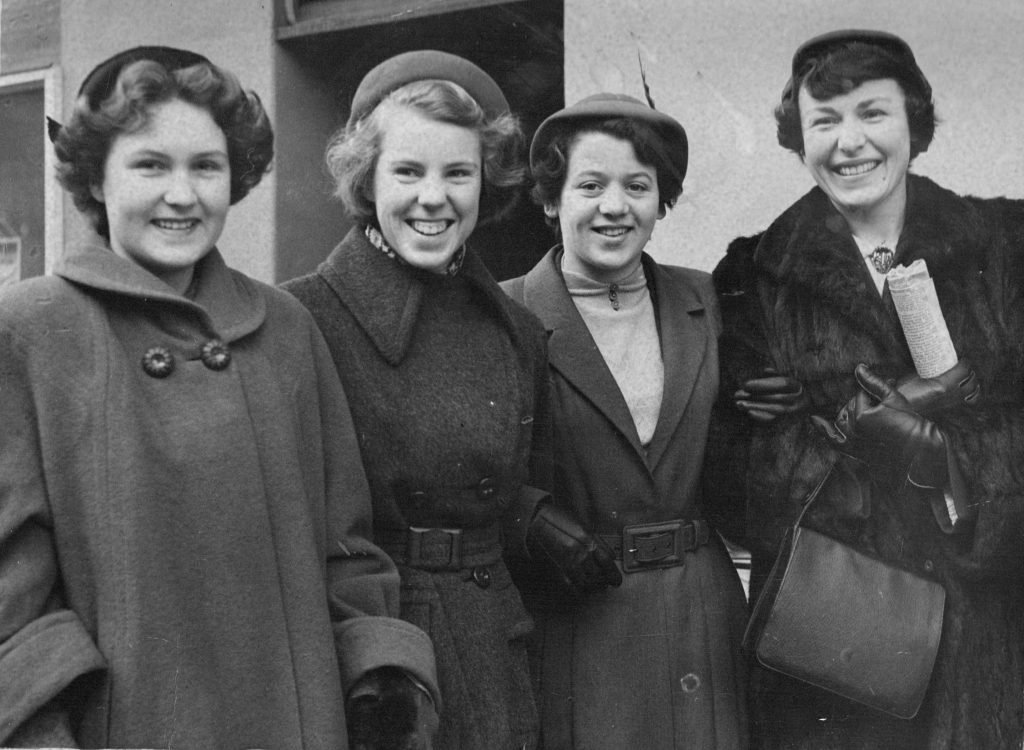
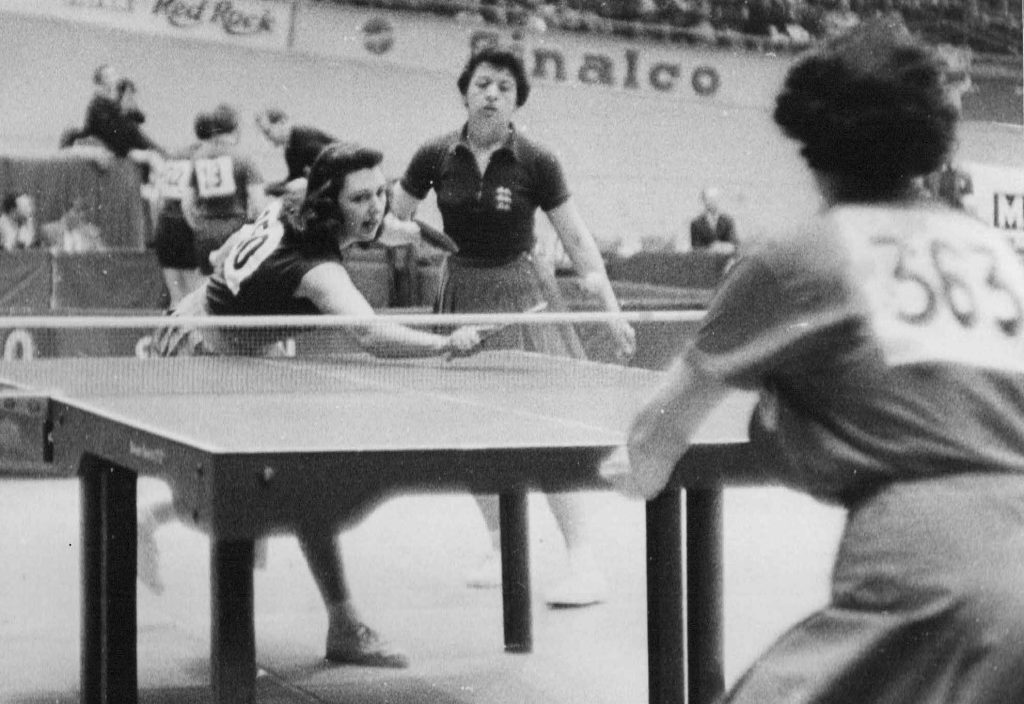
Kathleen was one of a quartet of English players who played in a match with a unique place in history – the 1954 Women’s Doubles final in which she and Ann Haydon took on the Rowe twins, Diane and Rosalind, with World Championships gold at stake.
That match at Wembley – in the year London last hosted the Worlds – was the first and only time the Championships has witnessed an all-England final.
It was silver for Best & Haydon, who each became icons of British table tennis and between them won 15 World Championships medals.
Kathleen’s share was five – she also won Women’s Doubles bronze in 1953 with Ermelinde Wertl of Austria, Corbillon Cup (Women’s Team) silver in 1953 and team bronzes in 1952 and 1954.
And yet she never boasted about these achievements and did not have most of her trophies on display, something Peter says was typical of a humble, hard-working woman who was to him “just mum.”
“I knew she was in the 1954 World Championships, and I knew about the all-England final against the Rowe twins, but I thought she had just that one runners-up medal with Ann Haydon,” said Peter. “It was only when I looked into it later on, I found she had another medal in the doubles. I had no idea about that until quite recently.
“There were two cardboard boxes full of trophies in the garage. There were only ever two in the house – that one from 1954 and one from the Corbillon Cup.
“I think that’s typical of how little it was talked about. The incredible thing was she was so modest, she was just mum.
“Mind you, she was competitive on the table. I laugh when I see the clip of her and Ann Haydon playing against the Rowe twins in the 1954 final. The Rowe twins won and she went to hug them and was smiling – but she was being very diplomatic, because she loved winning and hated losing and would have been devastated.”
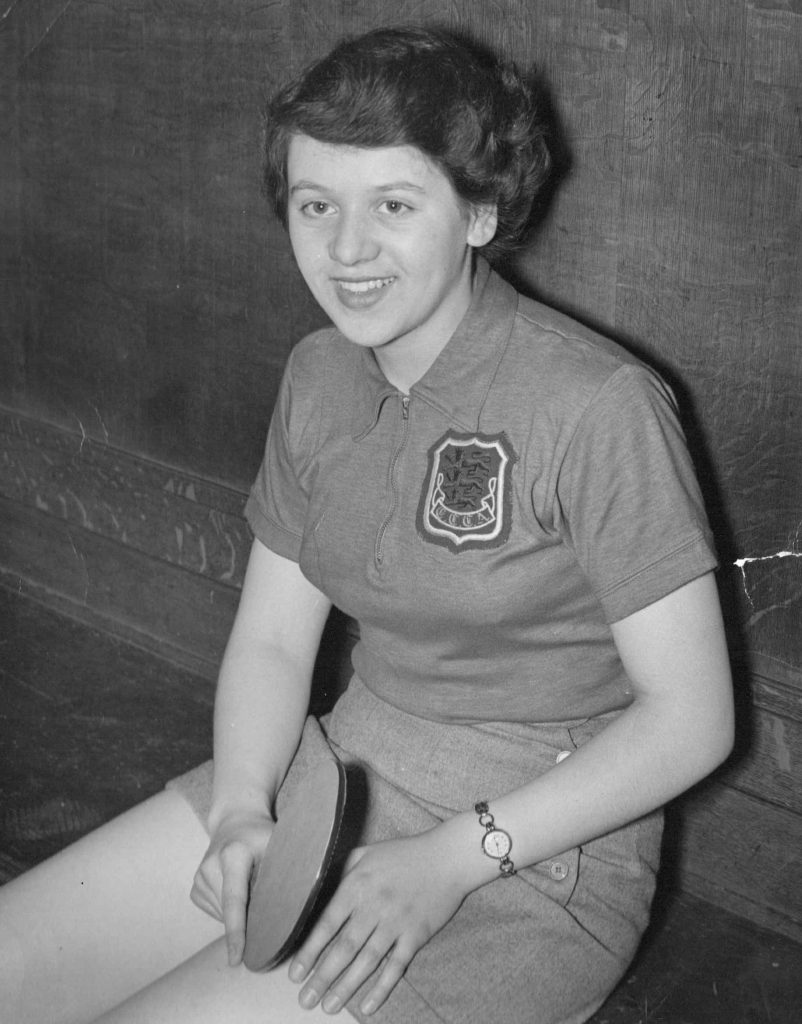
Kathleen was one of four siblings who grew up in a council house in Wakefield and was a latecomer to the sport, taking it up only at the age of about 15. Yet, she was still in her teens when she first appeared at the World Championships, in 1952.
That was the year she married Alan Thompson, who became her coach. The couple met and played at the YMCA in Leeds, the city where they would later raise Peter and his older brother, Christopher.
Kathleen also won two English Open titles and reached the top 10 in the world rankings, yet continued to live a modest life.
“These days if you were that high in the world at a sport, you’d be living the life of luxury,” said Peter, “but they didn’t make a big deal of it at home, they wouldn’t have been in any way showing off. I had friends at school who had no idea about the status of my mum in the sport.
“She was once the answer to a photograph on A Question of Sport. I went to school the next day and I was just kicking a ball against a wall or something and some kids came up and said they’d seen my mum on TV last night.
“I didn’t know what they were talking about – we didn’t watch the programme that millions were watching.”
Kathleen stopped playing around the time Peter was born and he added: “I never saw my mum play, so that’s a real regret.
“I used to attend competitions where my dad was coaching various people, and my parents had conversations about players every now and then. I remember one of the names which kept coming up as a marvellous player was Angelica Rozeanu (the Romanian who won six successive Women’s Singles world title in the 50s).
“They would talk about Brian Kennedy, who dad coached, and Alan Hydes. They were people I knew to be family friends as well as people dad had coached.
“I went with my dad and Alan Hydes to the 1977 World Championships. We were walking down a corridor at the NEC and this great big, suited man came towards us. Alan was talking to him, and my dad was as well, and then he looked down at me and said ‘your dad was a world-class coach’. They told me later it was Ferenc Sido, the former world champion.”
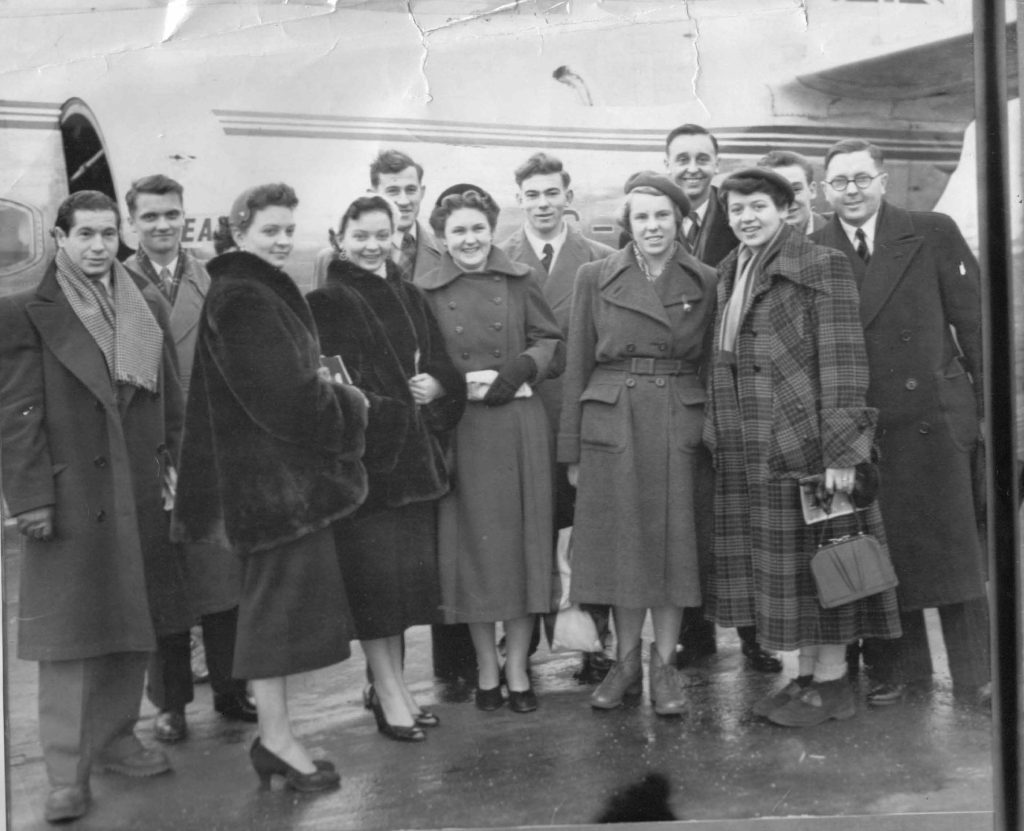
After her playing career finished, Kathleen was a teacher, and Peter said: “Some of the other things she did in her life were, maybe not equally impressive, but impressive nonetheless.
“For example, she went on to be a deputy head of a secondary school. She had a special interest in the underdog and the more underprivileged people in the world, including helping children with special needs and those who had been excluded from school.
“She was asked to run a centre for children who’d been repeatedly excluded. It was two rooms above a community centre in Leeds. As well as all the schoolbooks and desks, she wanted a table tennis table there, so the education authorities gave her that.
“Shortly after opening, one of these ‘hard lads’ came along and saw the table. He said to my mum he’d beat her. So, she said ‘let’s do the work first and then we’ll have a game’.
“When they came to play, she asked him which hand he wanted her to use and whether he wanted her to use a plate or a book instead of a bat. Of course, she wiped the floor with him!
“She was so determined to win. That old saying of ‘it’s not the winning, it’s the taking part’, that would never have entered her mind in a million years.
“The family were, and are, all Catholic and my parents also set up a hostel for men who were leaving prison and needed somewhere to stay before going back into the real world.
“And they were part of setting up a community home for people who had previously been in mental institutions and had learning difficulties. Dad received a Papal knighthood for services to people with learning difficulties.
“I was just brought up by two really top people. They were so generous with their time had a great knack of making everybody feel good.”
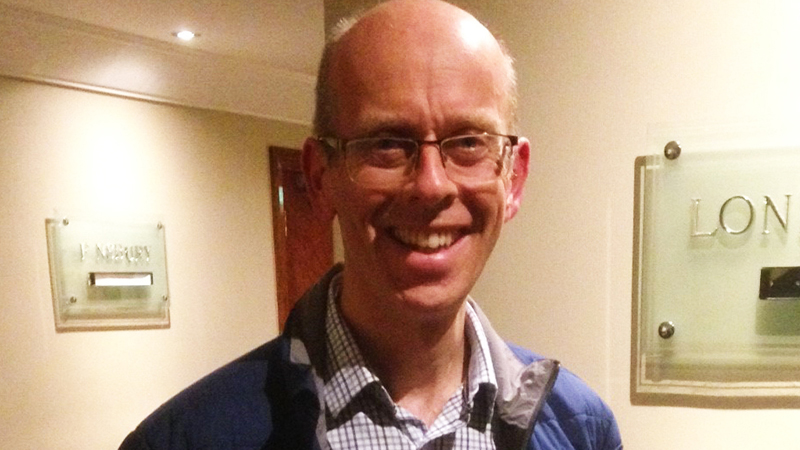
Peter freely admits he has not inherited the same skill level from his mum, who died aged 70 in 2003. But table tennis is still a huge part of his life, as a full-time coach in various settings, including schools in the Leeds area and through the Ping! Initiative, as well as with older people and Disabled People.
Known as Ping Pong Pete, he was Ping! Personality of the Year in 2017/18, part of the Pride of Table Tennis Awards.
He said: “My parents played table tennis with me and helped me, but I was by no means a great player and somehow by the age of 10 they’d guided me to play golf instead – but it was never ‘what a let-down’.
“I’m the worst player in my family – my brother Christopher was the Leeds Junior Champion and Captain of Oxford University, dad was a world-class coach.
“I coach full time, mostly with young people and generally in deprived areas of Leeds. I work a lot with Shakespeare Primary School and the last three or four years, they’ve been West Yorkshire champions in the Under-11 Boys and Girls. In 2023, the girls finished fourth in the National finals.
“I love doing it and it must be in my DNA. I would like to hope I’ve followed in their tradition, and I don’t want any fuss.”
Latest news
- GB performance
- Competitions
Three new events added to popular Swansea Open - entries open
- Counties and Leagues