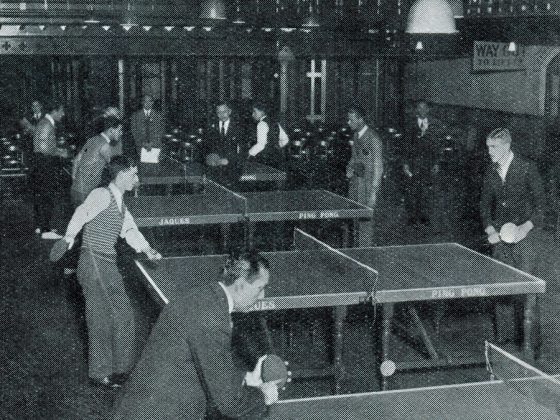
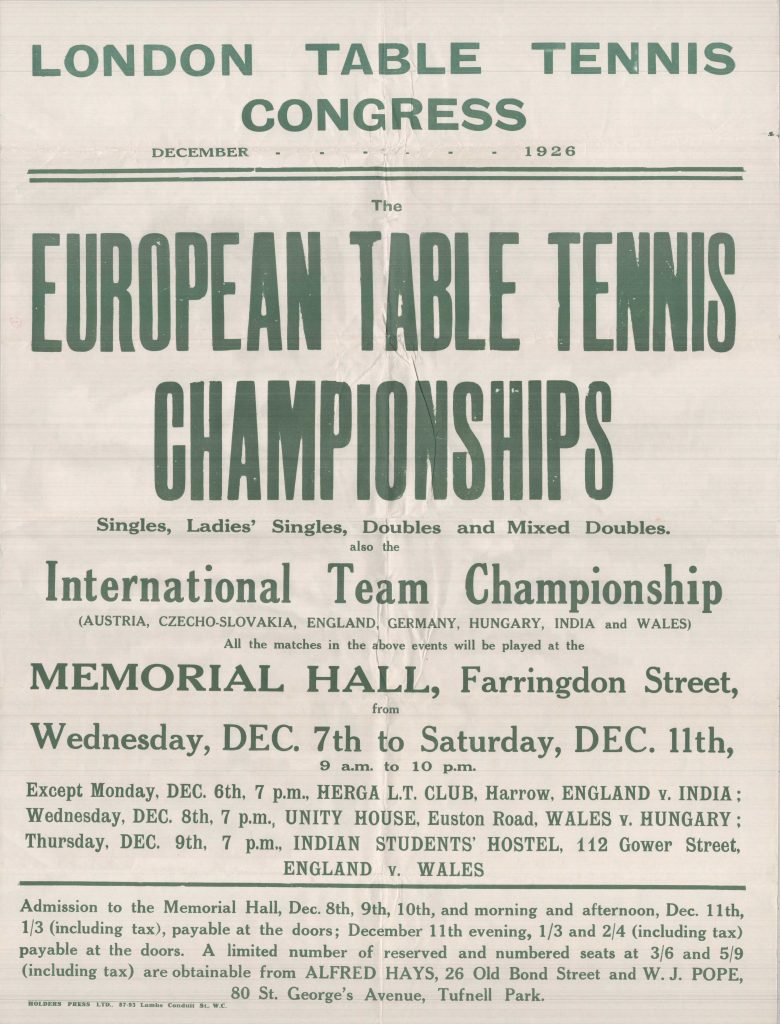
The year 1926 was a momentous one in the history of international table tennis. Triple events were planned in December 1926 in London – the International Table Tennis Federation (ITTF) Conference, a tournament entitled The European Championships and an International Team Championship tournament.
The foundation meeting of the ITTF was held at the London Congress on Tuesday 7 December at the Duke of York’s Room, The Stadium Club, Holborn where Ivor Montagu was elected as chairman, a position he held for the next 40 years.
Earlier in the year he had been elected as President and Chairman of the English Association, not bad for a young man of 22. That first meeting was short and adjourned until 12 December. The one matter directly relevant to these championships was to rename the Championships as World rather than European due to entry by Indian players who were based in London.
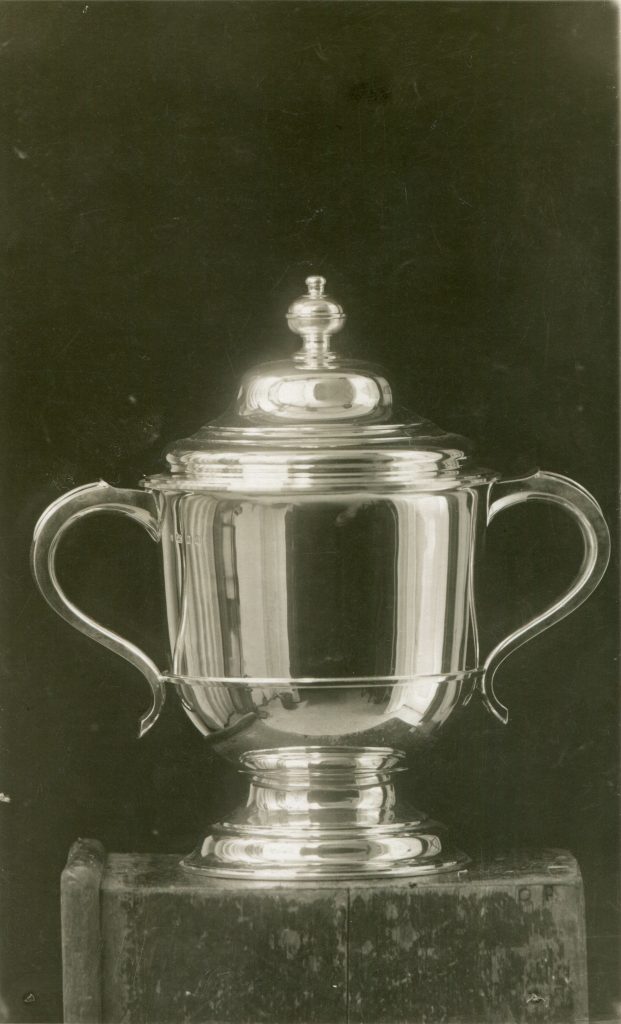
A cup was presented by Lord Swaythling in honour of his wife, the Dowager Gladys, Lady Swaythling, to the Table Tennis Association of England, the precursor of the English Table Tennis Association. This became known as the Swaythling Cup and was for the Men’s Team competition, the only perpetual trophy at these championships.
Their son, Ivor Montagu, who was elected chairman at that inaugural meeting of the ITTF on 7 December 1926 tells how the cup was acquired: “I remember going to the vaults where my father’s bank kept its bullion and choosing a cup, a fat silver thing in the opulent old English style.”
There were six events overall. The Men’s Team Championships, Men’s Singles, Ladies’ Singles, Men’s Doubles, Mixed Doubles and Men’s Minor Singles – the latter excluded the four seeded players of each nation in the Men’s Singles.
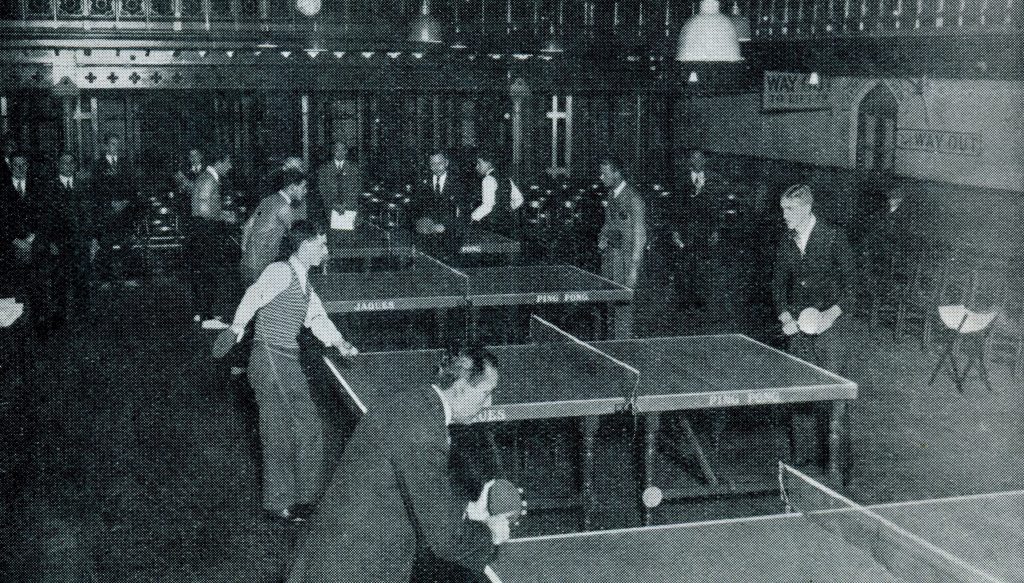
Seven teams entered the Men’s Team Championships: Austria, Czechoslovakia, England, Germany, Hungary, India and Wales. All teams played each other and all three players in each team also played each other, 21 up and best of three. Four venues in London were used: Herga Lawn Tennis Club in Harrow, the Memorial Hall in Farringdon Street, Unity House in Euston Road and the Indian Students Hostel, 112 Gower Street.
The first ball was struck at 7pm at the Herga Lawn Tennis Club at the match between England and India. The England team for this match comprised Charles Allwright, Bernard Bernstein and captain Percy Bromfield. They faced S Raja Gopal Suppiah, Athar Ali Fyzee and their captain A M Peermahomed. The result was close, with five of the matches going to three. All three England players lost to Suppiah and Bromfield also lost to Fyzee and Peermahomed, leaving India the victors by 5-4. Suppiah was well known to the England players as he had won the English Open in Grimsby earlier in the year and went on to win it again in 1927.
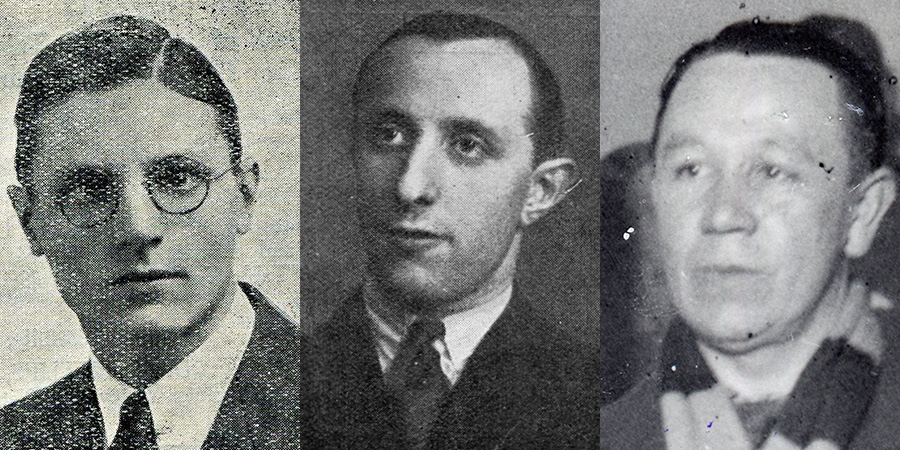
England’s second match was played at the Memorial Hall against Austria on Wednesday morning, 8 December. Another close match, but this time England came out on top with a 5-4 victory. Allwright and Bernstein played again and James Thompson replaced Bromfield. Allwright beat Eduard Freudenheim but scratched to captain Paul Flussmann and Munio Pillinger, Bernstein beat Flussmann and Freudenheim but lost to Pillinger whilst Thompson beat Flussmann and Pillinger and scratched to Freudenheim.
The afternoon of 8 December and it was England’s most challenging match against the strong team from Hungary. Bromfield was back in the team and although he beat Dr Dani Pesci, he lost to both Zoltan Mechlovits and Dr Roland Jacobi, Allwright lost to all three Hungarian players and Thompson, like Bromfield, had a win against Pesci but lost to the other two. Final score 7-2 to Hungary.
Match number four was an 8-1 victory against Germany on Thursday morning. Allwright and Thompson both won three against H G Lindenstaedt, Gerstmann and Preen, whilst Bernstein had two wins but lost against Lindenstaedt.
Thursday afternoon saw a comprehensive win 9-0 against Czechoslovakia. Frank Burls was in the team this time and Bernstein and Thompson continued their success of the morning. Czechoslovakian players were Antonin Malacek, Jaroslav Hajek and Jaroslav Kautsky.
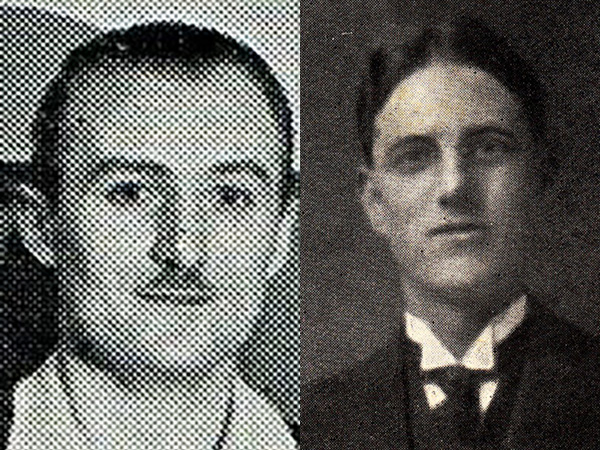
England’s sixth and final match was against Wales the same evening. It was another close encounter and England scraped through 5-4. All three England players beat S Stone but none kept a clean sheet. Bernstein lost to C Mossford and H G Geen, Bromfield beat Mossford but lost to Geen and Thompson lost to Mossford but beat Geen.
The results table at the end of all matches was five points for Austria and Hungary with Austria losing to England and Hungary losing to Austria. England and India both ended with four wins, Wales two, Czechoslovakia one, whilst Germany lost all their matches.
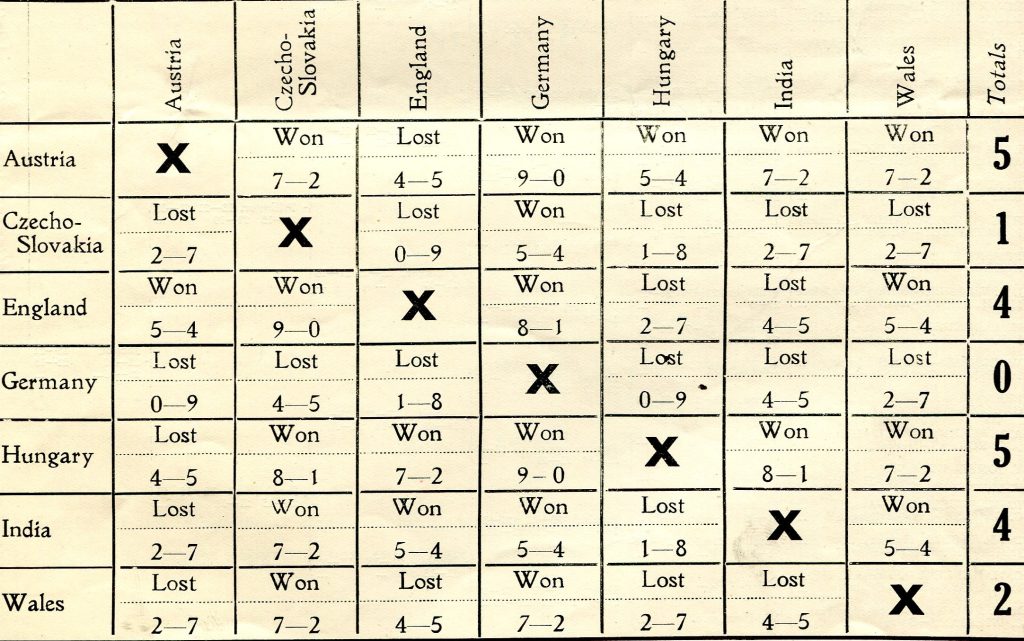
The programme stated that if teams ended on equal points then they would be joint holders unless they agreed otherwise. Austria and Hungary must have agreed to a play-off to decide who would be awarded the title of Men’s Team World Champion. In the first encounter between the two teams, Austria had a close win but the result this time was reversed with Hungary winning 5-4. England finished third, India fourth, Wales fifth, Czechoslovakia sixth and Germany seventh.
Who were the players in that first England team?
- Charles Allwright: 24 years old, who also played football and cricket at a high level. He played against Wales in 1925 and 1926, was runner-up in the English Open in 1925 and regarded as England’s number 1. Described as “an all-round player who uses his head; he is patient and his position playing is exceptionally good. He plays in spectacles and uses the rubber racket”.
- Bernard Bernstein: 26 years old, who was nominated as England’s representative at the London Congress. He was runner-up in the English Open in 1927 and won the Men’s Singles at the London Open in 1925-26 and 1926-27. He was also a fine billiards player. A pen-holder who “uses the wooden racket and plays every ball on the half-volley; an unvarying game but an impregnable defence”. Bernstein later was the first winner of the Jubilee Cup in 1948, a competition for those who had played in the first World Championships.
- Percy Bromfield: 39 years old and one of the original pioneers of the early game having been Chairman of the Ping Pong Association (PPA) in 1921 and the Table Tennis Association in 1922 and 1925 and founder member of the English Table Tennis Association (ETTA). He was responsible for the revival of the game along with Austin Carris and JJ Payne in 1921-22 after it had been dormant for 15 years. He was captain of, and played in, the first international against Wales in March 1923, also in 1925, 1926 and 1928. He won the All-England Championships in 1903-04, 1921 and 1925. Regarded as being the originator of using a rubber-faced bat and inventing the flick attack. Described as “the greatest tactician, the most varied and experienced player in England, and a model to all beholders”.
- Frank Burls: 24 years old. He won the Civil Service Championships in 1925-26 and went on to win 12 more titles. Won the English Open Men’s Minor Singles in 1927 and Czechoslovakian Open Men’s Doubles in 1928-29 with Adrian Haydon. Described as having “a beautiful style, can play every stroke in the game but lacks experience”.
- James Thompson: 37 years old from Bristol, the only non-Londoner. Won the Daily Mirror British Championships in 1923, the first prize was a car. Senior England international debut against Wales on 8 December 1923, also played against them in 1926-27 when he was captain, 1927-28 and 1934-35 gaining a further international cap in 1932-33 against the Irish Free State. Described as “a straightforward attacking player, a good fighter who uses the rubber racket”.
Who won the individual medals?
The individual events started on 10 December at the Memorial Hall, where all matches were held over the next three days.
There were 64 entries in the Men’s Singles and as well as countries represented in the team event there were players from Denmark. The majority of entries were, however, from England, with a good number from Wales. This time it was 21 up and the best of five games. Although four players from each nation were seeded, the seeding was disregarded for the draw and so on occasion seeds met seeds in the first round.
Jacobi, a member of the Hungarian championship team, became the first World Champion in the Men’s Singles with victory in the final over compatriot Mechlovits 12, 22, 19. Semi-finalists and bronze medallists were Suppiah and Pillinger. England’s highest places were in the round of 16 with Allwright, Lionel Farris and Tommy Dawn reaching this stage.
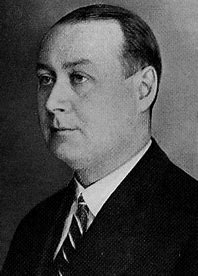
The Ladies’ Singles Championships – note Ladies’ and not Women’s – had 16 entries with 11 players from England, two from Austria, one from Czechoslovakia, one from Hungary and one from Wales. It was another victory for Hungary as Maria von Mednyanszky became the first World Champion in this event beating Doris ‘Dolly’ Gubbins of Wales 15, 19 in the final. Winifred ‘Wendy’ Land of the Herga Club was the first England individual medallist, losing to Mednyanszky in the semi-final. Kathleen Berry and Joan Ingram went out in the quarter-finals.
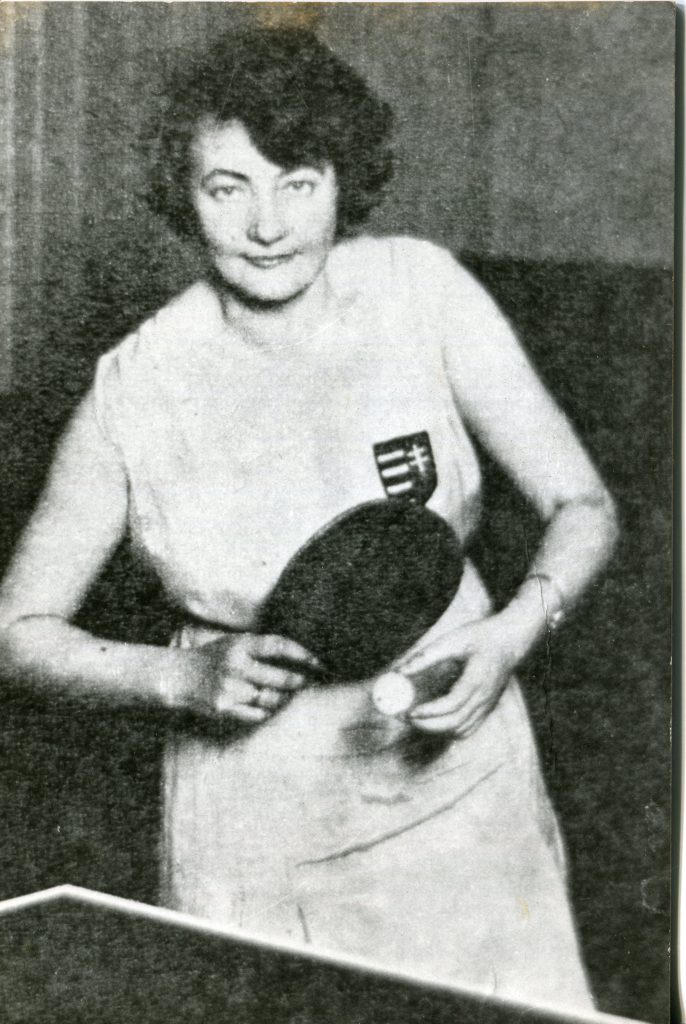
The Men’s Doubles saw another gold medal for Jacobi, partnered by Pesci, they defeated Mechlovits & Kehling 15, 11, -19, 11. Wales’s Mossford & Penny and Germany’s Flussmann & Pillinger took home the bronze medals. Herbert Bennett & George Ross plus P Ranger playing with German Freundenheim were the best-placed English players going out in the quarter-finals. There were 27 entries in total.
A small entry of 14 in the Mixed Doubles and it was another triumph for Hungary, making it a clean sweep of titles as Mechlovits & Mednyanszky beat Jacobi & England’s Miss G Gleeson of the St Bride’s Club,14, 8 in the final. Wendy Land won her second medal as a losing semi-finalist with Bennett.
The Men’s Minor Singles title went Pillinger of Austria with a 16, 17 win over Birmingham’s Frank Lawes. Lionel Farris and A W C Palmer both reached the quarter-finals. This event had a good entry of 60.
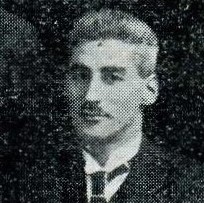
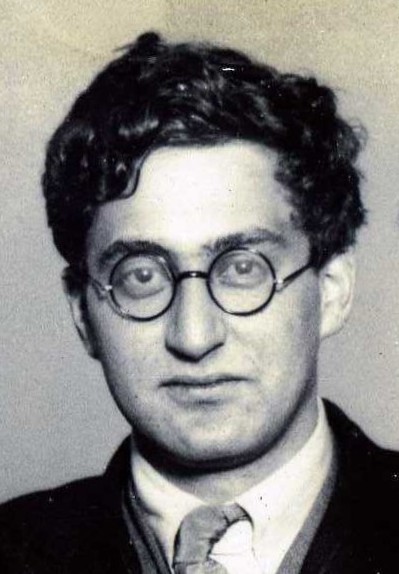
The overall organisation and administration of these first World Championships was led by referee Ivor Montagu and his committee which comprised his right-hand man, Bill Pope, Philip Warden and a co-opted representative of each visiting nation.
Montagu had only persuaded the English Association to hold the Championships after guaranteeing to cover any loses up to £300, which he could afford to do following a family legacy. As it was, the deficit resulted in Montagu contributing £150. The cost of the whole venture came to £352 with income coming from sale of tickets at £60 18s 1d, sale of programmes (£9 14s 3d), advertising in programmes (£25 0s 0d), entry fees (£56 12s 0d), donations excluding that from Montagu (£50 0s 2d).
Expenditure took the form of preliminary expenses of £13 6s 6d, hire and associated costs of the Memorial Hall (£76 3s 0d), printing (entry forms, tickets, scorecards, agendas, programmes, posters & advertising, translations (£75 18s 0d), tax (£12 12s 6d), foreign team expenses (travel and lodging) (£140 0s 0d), reception & food (£9 4s 6d) and medals (£25 0s 0d).
A tremendous achievement and a great success. Those who took part could never have imagined how the World Championships would grow and develop nor the scale of them today. 100 years on, it is a privilege to recognise those who were there at the beginning.
Latest news