Evie Collier, Steve Brunskill and Aad Kwakkelstien had yet another busy but rewarding month, as the Coach Development Team took on several club visits up and down the country and the opportunity to support some fantastic table tennis activity taking place in clubs and communities. Read the latest from club visits below.
Hummersknott Academy Darlington
Steve’s first visit of the month was a return to Hummersknott Academy in Darlington to see how things have progressed since the last visit. Once again, the hall was buzzing with activity. There were well over 30 players attending, supported by around a dozen coaches and volunteers, creating a fantastic and energetic atmosphere. The enthusiasm in the room was clear to see, with players fully engaged and clearly enjoying their table tennis.
During the session, Steve was asked if he could spend some time working with some of their younger players. In particular, a couple of talented under-11 girls. They spent some time working through a few technical elements and drills, and Steve was very impressed with their ability and eagerness to learn.
What stood out most during the visit was the commitment of the coaching team. They are all keen to continue learning and developing their coaching skills, which is always a great sign for a thriving club environment. With the strong foundations already in place and the enthusiasm of both players and coaches, this club will only continue to grow stronger.
Hertsmere TTC Visit
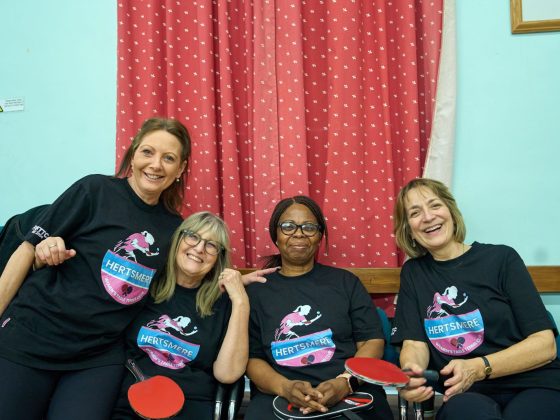
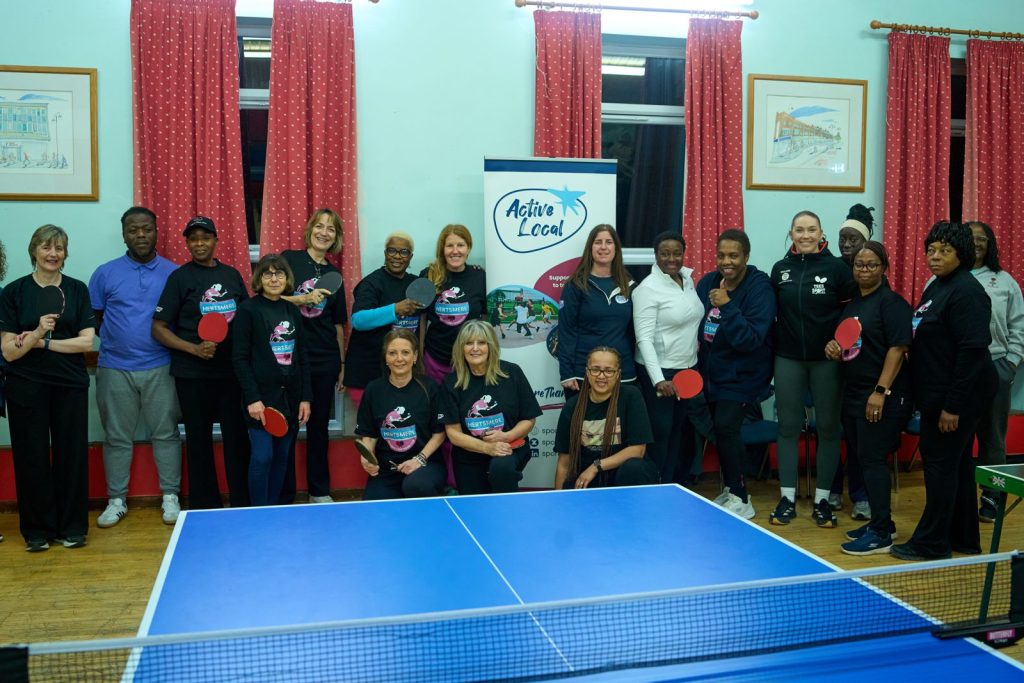
On February 17, Evie Collier had the pleasure of visiting Hertsmere Table Tennis Club in Borehamwood — an evening that truly highlighted the impact a welcoming and inclusive club can have within its community. Hertsmere Table Tennis Club has built a strong reputation for creating a safe, supportive space where women and girls of all ages and abilities can develop their skills, grow in confidence, and enjoy the game in a positive environment.
The first session of the evening focused on a group of young girls who had only been playing for just over a month. It was incredibly encouraging to see so many young players already demonstrating enthusiasm and commitment to improving their game. The session concentrated on core fundamentals — grip, ready position, forehand and backhand technique, and ball control. Under the guidance of Delphine, who leads the club, the session was delivered with warmth and infectious enthusiasm. What stood out most was the visible progress during the session. As confidence grew, rallies became more consistent.
The second session was a true reflection of the club’s popularity and spirit. All four tables were in constant use, with players eagerly waiting for their turn to step in. The group included women of all abilities — from beginners to more experienced players — yet the sense of unity was evident throughout. There was a wonderful balance of friendly competition and mutual support. Players challenged one another while also celebrating good shots and offering encouragement. The hall was filled with laughter, determination, and a genuine love for the sport. It was inspiring to see so many women confidently taking up space in sport and enjoying the benefits of being active together.
Hertsmere Table Tennis Club is clearly about more than simply playing the game. It is about creating opportunities, building friendships and empowering women and girls through sport. The dedication of Delphine and the wider club team is evident in the growth of the sessions and the positive culture that has been established.
Clubs like Hertsmere play a vital role in strengthening local communities and increasing female participation in sport. It was a privilege to witness first-hand the passion and commitment driving this club forward.
Active Local’s commitment to strengthening community sport initiatives is clearly making a difference, and it is fantastic to see organisations working collaboratively to create more opportunities for women and girls to participate in table tennis.
Aad Kwakkelstein took on two specific club session visits and a Level One Coaching Course assessment day in February, which includes Ely Table Tennis Club (Monday 16 February 2026) and Mossford Table Tennis Club (Thursday 26 February 2026). Both clubs provided valuable insights into multi-ball application across diverse playing environments, while also showcasing inspiring examples of lifelong learning in coach development.
Ely Table Tennis Club
Working alongside coach Hugo Brown at Ely on Monday 16 February 2026 revealed the unique dynamics of community-centred table tennis development. The club’s evening session featured a predominantly adult membership, with approximately 30 adults and three junior players who were new to the sport.
Hugo’s approach demonstrated how multi-ball techniques can be effectively adapted for community clubs, where the focus shifts from competitive development to skill-building and enjoyment. The presence of beginners alongside experienced adult players created an ideal environment for demonstrating how multi-ball drills can be modified to accommodate varying skill levels within a single session.
Mossford TTC
The visit to Mossford Table Tennis Club at Redbridge Sports Centre on Thursday 26 February 2026 provided a comprehensive view of structured coaching across different player demographics. The evening featured three distinct sessions, each tailored to specific skill levels and age groups.
Sessions 1 and 2 were led by Tiana Dennison, demonstrating good session management across beginner and advanced player groups. During the advanced session, the opportunity arose to conduct multi-ball training with promising players Mimo and Daniya, showcasing how targeted multi-ball work can enhance technical development for competitive players.
Session 3 was delivered by Tony Cantale , focusing on recreational adult players and highlighting the versatility required in coaching different demographics.
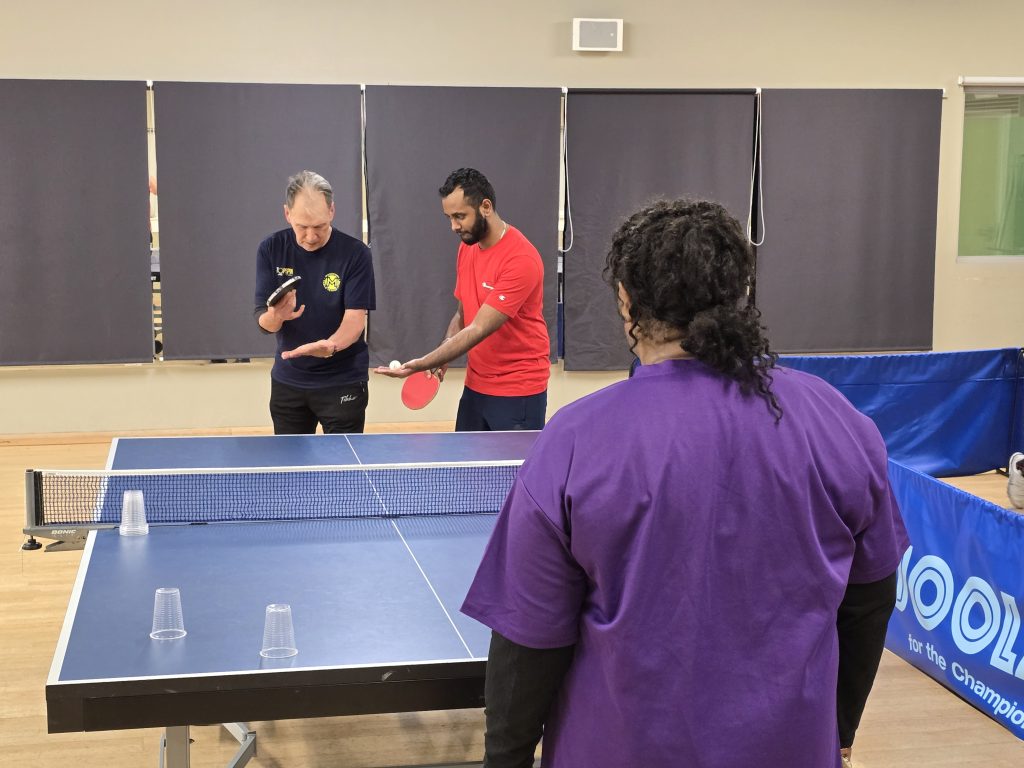
Perhaps the most inspiring aspect of the Mossford visit was witnessing Tony Cantale’s commitment to continuous development. At nearly 80 years old, Tony exemplifies the principle of lifelong learning in coaching. His presence across three sessions, adapting his approach for different player groups, demonstrates that age is no barrier to ongoing professional development and contribution to the sport. Notably, Tony expressed a specific interest in improving his multi-ball skills, which is a testament to his attitude toward learning and personal growth. His proactive approach to refining his coaching techniques highlights the importance of self-motivation and a growth mindset, serving as an excellent example for the players he mentors.
A particularly encouraging observation came after the formal sessions concluded. Mimo and Daniya continued their training independently, pushing each other through a challenging Falkenberg drill. This self-directed motivation represents the ultimate goal of effective coaching – developing players who take ownership of their improvement journey.
Redcar Bat and Chat
Next on the schedule for Steve was another return visit, this time to Redcar College, for their community Bat and Chat session.
The group is now back to normal sessions following the earlier inclusion of massage and treatment support, and it remains a fantastic social and active environment. The group works through a series of exercises during the session, including movement drills, serve practice, third-ball drills, and matchplay. There are around 20 regular players, many of whom are well into their 60s and beyond, and it is genuinely inspiring to see how much they continue to improve and enjoy their table tennis.
After around 90 minutes of continuous play, the group usually head into the college’s excellent canteen facilities where they sit together for coffee and conversation. Steve also noticed that several players are now staying for lunch, with the food offering great quality and value. Sessions like these highlight the important role table tennis can play in social connection, health, and lifelong participation.
Northfield Table Tennis Club
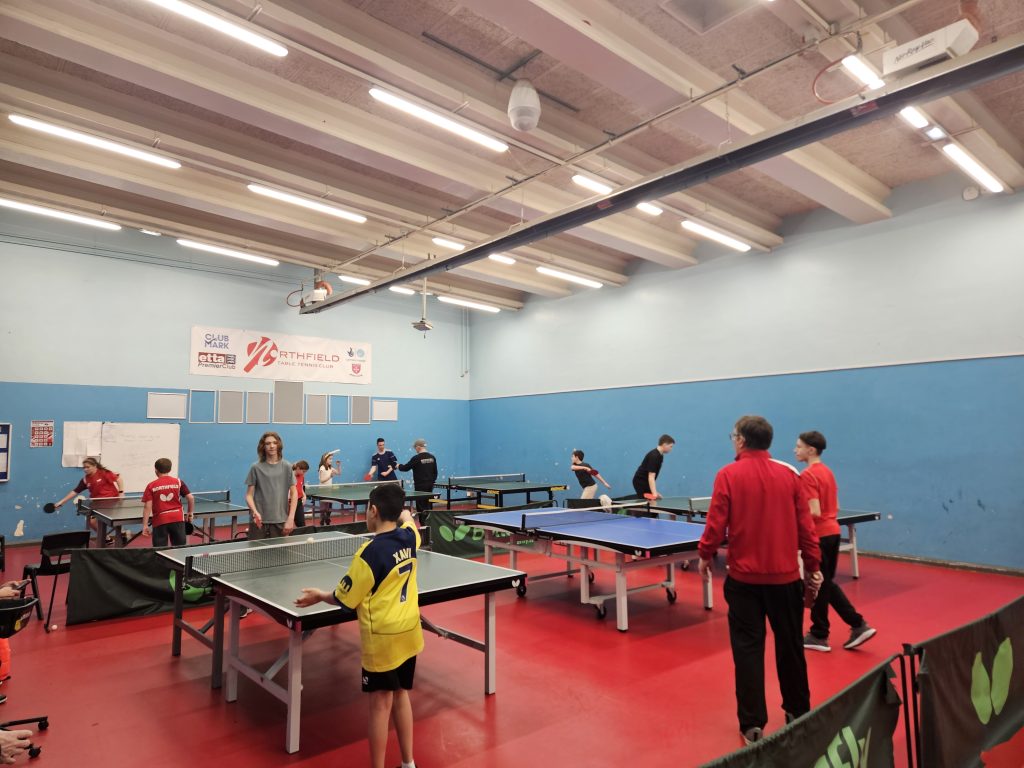
Northfield has been running for many years and has had a lot of success in the past, creating many England junior talents who have progressed on to big things within the sport, in both the boys and girls game. Over the past year Terry Murphy (68), a newly qualified coach, has started trying to redevelop the club back to its former glory.
Terry started playing table tennis around the age of 15 in the Stockton League and progressed to National League Division 2 and represented Cleveland County. After over 30 years out of the game, Terry recently came back to play in 2023 in the first division of the Stockton League. He started helping out at the Northfield junior sessions and in 2025 decided to take his TTE Level 1 Coaching qualification. Terry has since been coaching the junior squads on a regular basis and is really enjoying the challenge and aiming to develop his knowledge further.
Steve chose to take Terry’s advice to create February’s Monthly Coaching Tip, which focuses on helping newly qualified coaches to find ways of getting the players to hit as many balls as possible in a session. He says his theory behind this is, a player will soon get tired of playing table tennis if they are spending most of their time picking up the ball rather than enjoying playing table tennis. A simple reminder that sessions need to be fun for beginners and that beginners are more likely to miss the table, but that isn’t where the fun is had.
The Last Level 1 Course Marks New Beginnings
The final Level 1 coaching course organised by Table Tennis England concluded with remarkable success at Wensum Table Tennis Club in Norwich, marking both an end and a beginning in the evolution of coach development. This historic milestone saw 19 dedicated coaches achieve their practical qualifications, with one final assessment creating a truly memorable conclusion to an era.
The weekend course at Wensum TTC demonstrated the strength of collaborative coaching development. Throughout both days, the programme benefited from exceptional local support, with Dale Ajeto, Wensum’s chairman and club coach, providing invaluable assistance that ensured smooth operations and created an optimal learning environment for all participants.
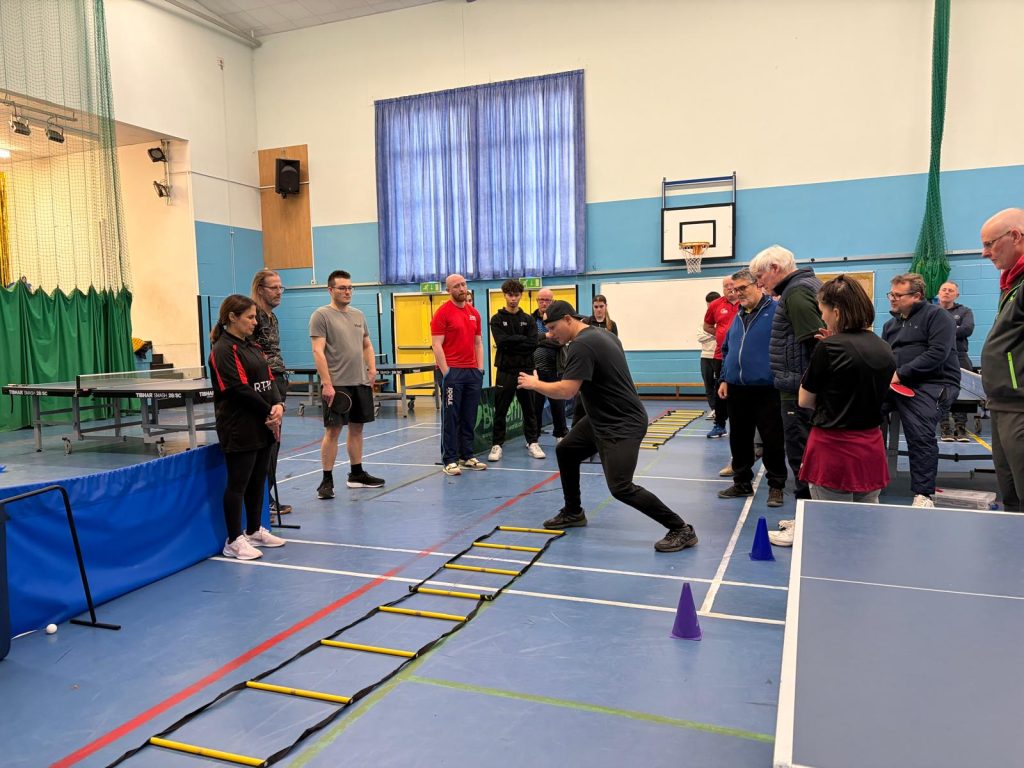
On day two, Mark Mitchell joined the team as assessor, bringing his expertise to the practical evaluation process. This collaborative approach between tutor, local club leadership, and assessment team exemplified the community spirit that has characterised the Level 1 programme throughout its existence.
While 19 coaches celebrated their success on 14 February, one candidate’s journey took a different path that would ultimately create coaching history. Shaun, unable to attend the Saturday assessment, required alternative arrangements to complete his qualification.
On Tuesday, 3 March, Shaun travelled to Britannia TTC in Ipswich for his individual assessment. This seemingly routine make-up session carried extraordinary significance – Shaun became the very last coach to be assessed under the original Level 1 programme, marking the definitive end of an era that began with Mark Dare’s pilot programme in Kings Lynn in 2018.
As one chapter closes, another opens with renewed energy and vision. TTE’s coach development team of Evie Collier, Steve Brunskill, and Aad Kwakkelstein is actively engaged in updating and redesigning the coaching course structure to meet evolving needs and incorporate latest best practices in coach education.
This transition represents a commitment to continuous improvement and adaptation, ensuring that future coaching qualifications remain relevant, effective, and aligned with contemporary coaching methodologies.
Latest news
- WTT events
- WTT events
- Team England
Super six ready to represent England with pride at Euro Minis