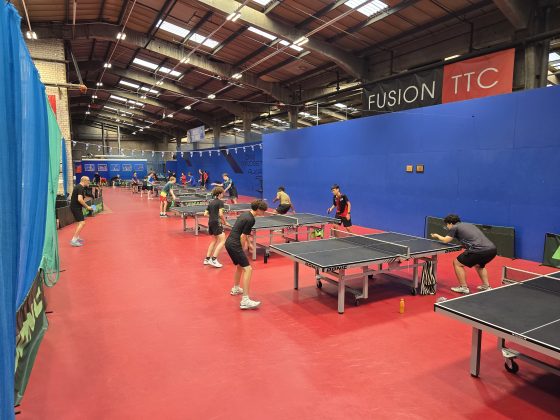
A productive evening of junior development, structured practice and coach collaboration – says Table Tennis England Coach Developer Aad Kwakkelstein. Read his first-person blog of when he visited the Millwall-based club.
On Friday 3 July 2026, I visited Fusion Table Tennis Club to observe the evening coaching sessions and speak with the coaches supporting the club’s player development environment. The visit gave me a useful insight into the structure of the sessions, the coaching team involved, and the way Fusion is bringing together younger players, older juniors and young seniors within a positive and purposeful training setting.
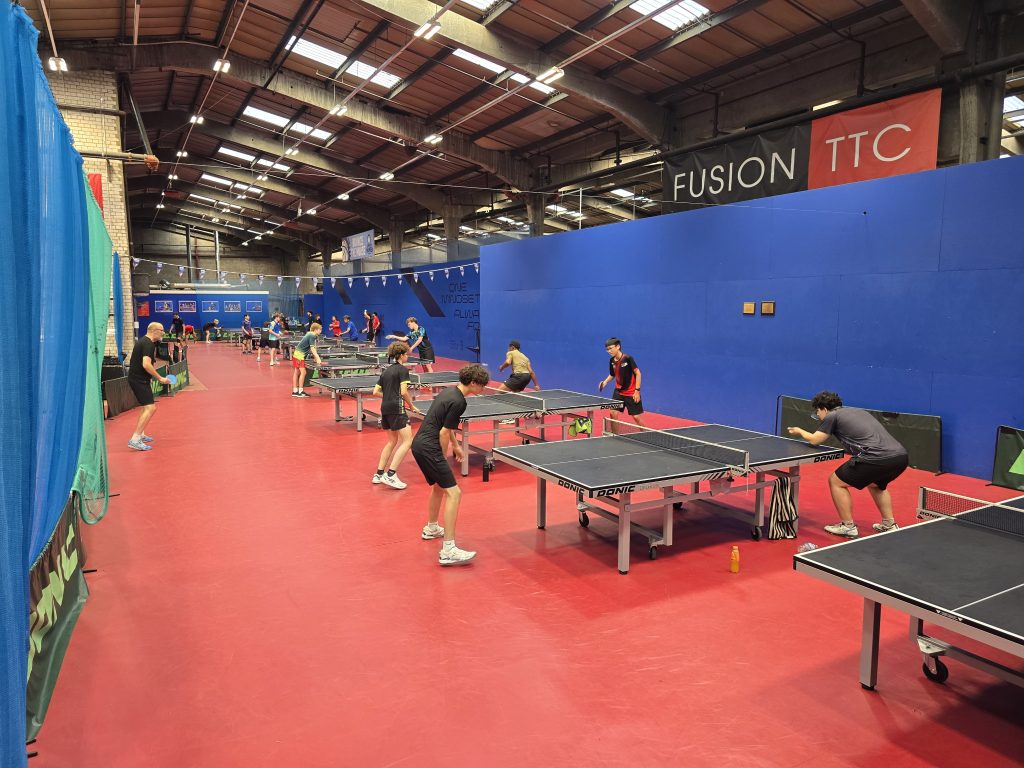
I arrived at around 17:50, towards the end of the early session, where six players were taking part. John Dennison was leading a round-the-table activity, with John blocking and keeping the tempo of the session moving. Sam supported John during the session and I remembered him from a previous club visit to Mossford, which was a nice reminder of how players / coaches often connect across different club environments.
Advanced group training
At approximately 18:15, the advanced group began their warm-up. Elena Todirca led this by demonstrating and completing the warm-up, helping to set a clear standard for the players from the start. John introduced me to the group and also reminded players about taking on water, which was particularly important given the heat in the hall.
The main session began with a footwork exercise built around forehand from the forehand, forehand from the middle, and forehand from the forehand again. The focus was on consistency, rhythm and recovery. Initially, players directed all three balls to the forehand side. After around five minutes, the exercise changed so that the same sequence was played to the backhand side of the blocker. This helped the group cover more directions and gave the session a consistent technical and physical start.
Serve, receive and third ball themes
After a change of partners, the session moved into service and receive. The first exercise used a Falkenberg pattern starting from a short serve and push. Initially, the block went to the wide forehand corner, before progressing so that the block could be placed anywhere into the forehand half of the table. This progression encouraged players to adjust, recover and make decisions rather than simply repeat a fixed pattern.
The second service exercise focused on a short backhand serve to the forehand, followed by controlled forehand touch and push exchanges before a forehand topspin played parallel down the line. This linked serve, receive, short-game control and the first attacking ball in a clear sequence, giving players a match-relevant way to practise the transition from short play into attack. It also placed useful emphasis on the backhand serve, which not all players consistently used, but which can be an underrated and valuable addition to a player’s game.
Physical finish
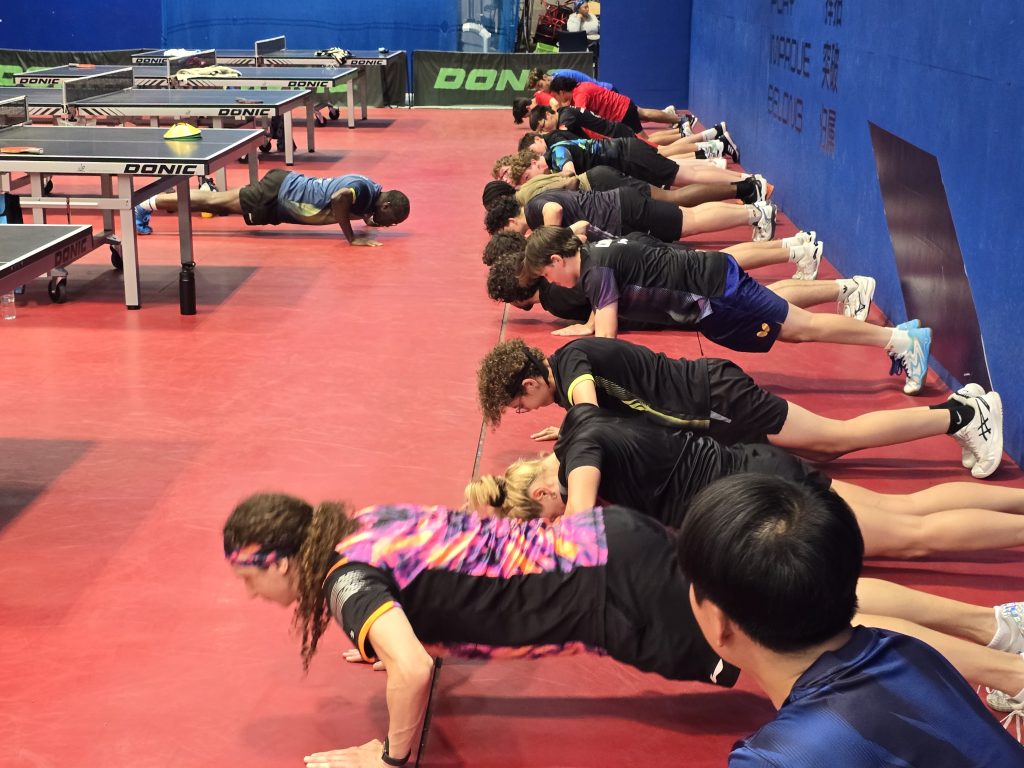
The session concluded with a short physical block, including frog jumps, sprint-push-up-sprint combinations, push-ups and wall sits. It was a demanding but purposeful finish, reinforcing the physical standards expected within the group.
Coaching team and club environment
The session was led by John Dennison, supported by Rohan Schloss and volunteer assistant Isaac Beevor. The advanced group had around 20 players, creating a lively and competitive atmosphere. Given the level of the players, this session sits clearly within a talent and club development environment. Fusion also has a history of developing players to a high standard, with Larry Trumpauskas the latest example of that pathway. It was particularly positive to see a strong core of players around the age of 18, as this is often the stage when players start to drift away from the sport. Having this age group present and engaged was therefore especially encouraging, both for their own continued development and for the example they set to younger players.
John also mentioned some uncertainty around the hall and possible redevelopment, which will be an important factor for the club to monitor. Even with that uncertainty, the visit highlighted a committed coaching team, a strong player base and a session structure that combined technical work, decision-making, physical preparation and positive coach-player interaction.
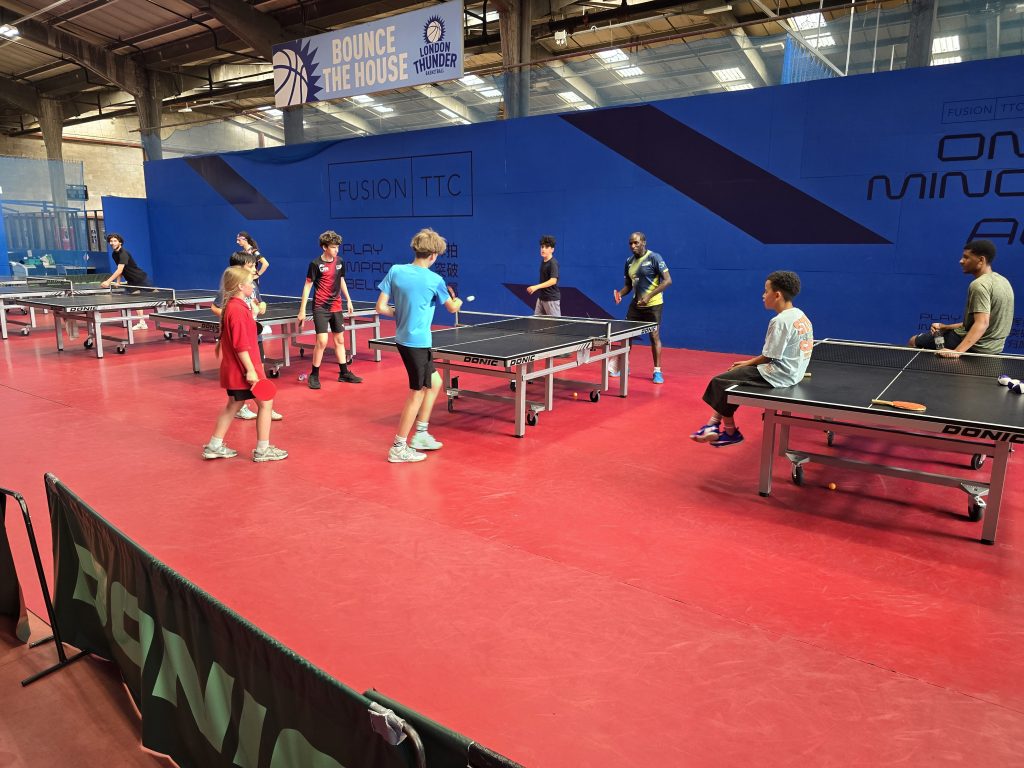
Overall, the Fusion visit was a valuable opportunity to observe an engaged club environment with clear coaching input and a good blend of player ages and abilities. The session was well organised, offered clear progressions and ended with a purposeful physical component, all of which contributed to a positive training culture. Most importantly, it was encouraging to see older juniors and young seniors still actively involved at an age when many players can be lost to the game. That gives Fusion a strong platform to continue supporting player development and maintaining participation through a key transition point.
Latest news