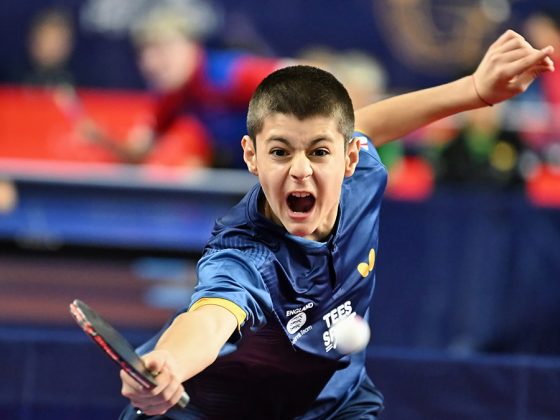
England’s young athletes are closing the gap to the top juniors in Europe, but have more work to do in several key areas, such as closing out tight matches, according to Director of Performance Development Gavin Evans.
Reflecting on the European Youth Championships in Portugal last week, Evans was pleased with the fight shown across the squad and with the improvement in overall quality of play.
He has identified “clever” ball placement and the mental and tactical approach at crucial points in matches, along with general fitness, as areas for improvement.
The Junior Boys and Cadet Boys both finished ninth, with the Girl’s teams in 18th and 20th respectively, placing England 12th overall.
Evans said: “This is a big improvement on last year but undoubtedly presents opportunities for the years to come to make improvements on this.
“We are competing well and challenging the best nations, however, lack the clinical finishing that will get us over the line. In 60% of matches we lost, we were in clear winning positions and were tentative and came out of the moment, possibly focusing on the winning line and forgetting to follow the process.
“We don’t consistently move the ball around enough into clever areas, and often play to the bat in the moments that most matter. We often serve without quality which then follows on to a badly-placed third ball.
“With the above said, I am filled with optimism as this is something that can be worked on in the training hall. Time on task and increasing volume and quality for our squad players will be critical in closing the gap.”
Evans added that the squad was able to compete harder in the team events at the start of the Championships than in the singles and doubles which followed, and that tiredness, fitness and resilience played a part in this.
“I am immensely proud of every one of the athletes who went to Portugal to give everything they had. They left everything out on the court and couldn’t have tried harder,” said Evans.
“The table tennis played was of very high quality on many occasions and is a clear improvement on the past number of years. The team are incredibly ambitious and believe that we can compete for medals in years to come.”
He said that closing the gap will take the following:
- A greater understanding of the intensity required day in day out in the training all, irrespective of the environments each athlete trains in
- Much more time on task with the right intensity to build confidence, fitness and resilience
- Quality matchplay in training
- Specific exercises working on placement
- Athletes learning about their own games and how to impose them on opponents
- Coaches to manage rest periods between team and singles and understanding energy expenditure to facilitate maximum recovery in these intense environments
- Management team to work on a greater understanding of event logistics to help minimise travel and burden on athletes