Norwich City TTC – Strong foundations and room to grow
Norwich City Table Tennis Club welcomed Aad Kwakkelstein for a visit, offering a valuable insight into a club with strong foundations, committed coaches and clear potential for growth.
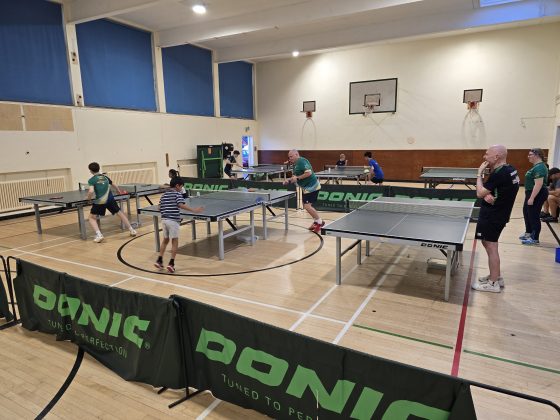
Based at Thorpe St Andrew High School’s North Site Gym, the club benefits from a spacious school PE hall, nine tables and a coaching team capable of delivering high‑quality sessions for a much larger junior membership than currently attends.
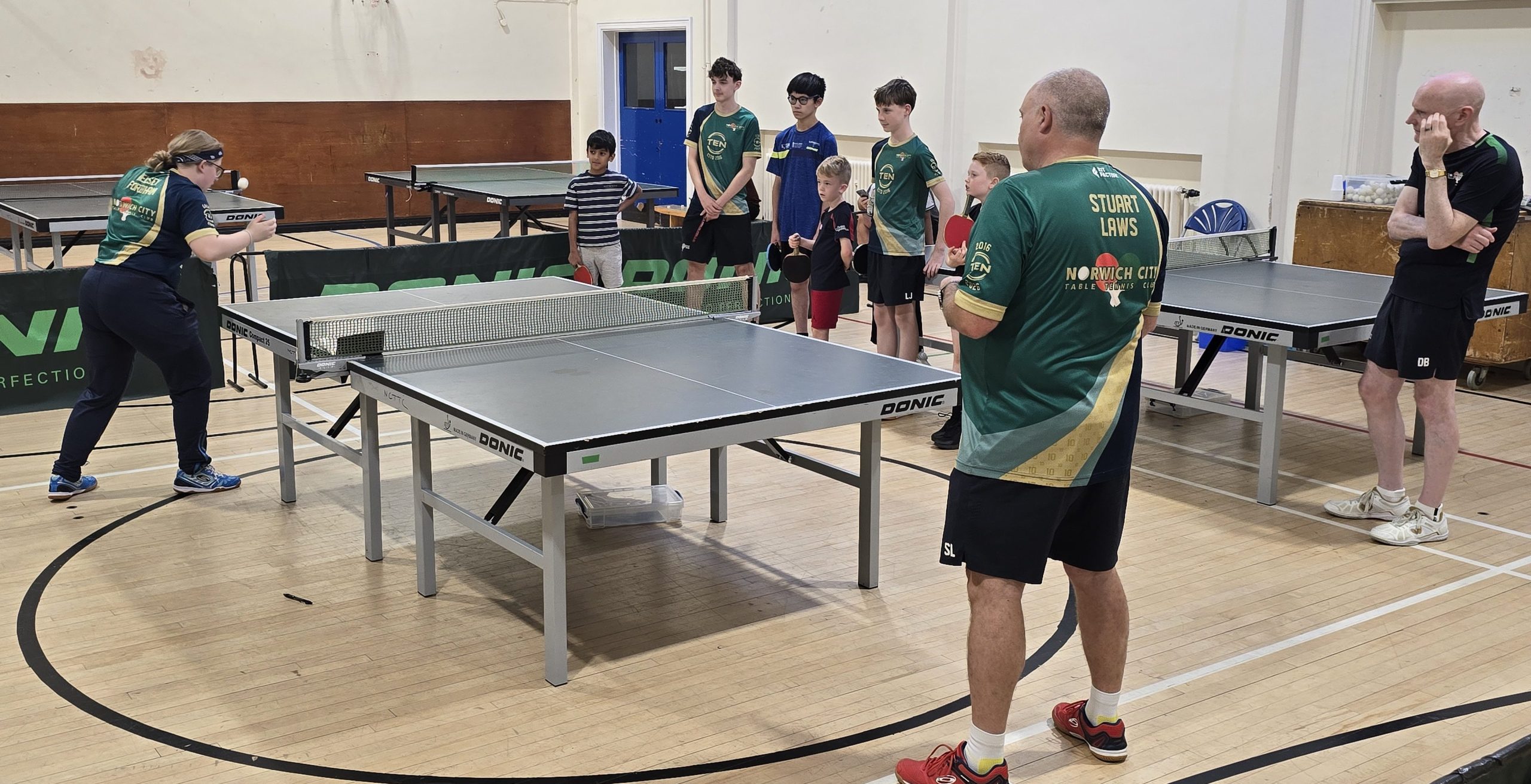
The junior session was led by coach Kelsey Fordham, supported by Head Coach Stuart Laws and David Boatman. Seven juniors took part: four under‑11s and three older juniors who represented the club in the Junior British Club League last season. Kelsey delivered an exemplary session, combining a structured warm‑up, clear demonstrations and well‑paced technical progressions. Activities included serve practice, a consistency drill progressing from one to five shots, a long‑serve backhand exercise and matchplay to finish. Adaptations were made for younger beginners, with Stuart and David providing one‑to‑one support where needed. The coaching team worked collaboratively and confidently, creating a welcoming and purposeful environment.
The club currently operates a pay‑as‑you‑go model. Players also have the option of one‑to‑one coaching with Stuart Laws or Kelsey Fordham. There is scope to introduce another evening of group coaching for juniors, helping the club expand its weekly programme and provide more opportunities for players to train and progress together.
One of the clearest opportunities for Norwich City TTC is growth in junior numbers. The hall, table capacity and coaching team can comfortably support more players, and the club would benefit from targeted promotion—particularly through local primary schools. Introducing a second junior night would allow beginners and more advanced juniors to train separately, create clearer progression and support long‑term sustainability.
The club is active in national competition pathways and has entered teams in WBCL, JBCL and CBCL again this season. Older juniors such as Jamie Clarke already support some of the younger players, as demonstrated during the service practice, and may later have the opportunity to become coaches, helping the club build a home‑grown coaching workforce. Kelsey Fordham is a prime example, having been part of the club for many years and now being a valued member of the coaching team.
Hinckley League – Grassroots coaching in league environment
A different kind of coaching visit
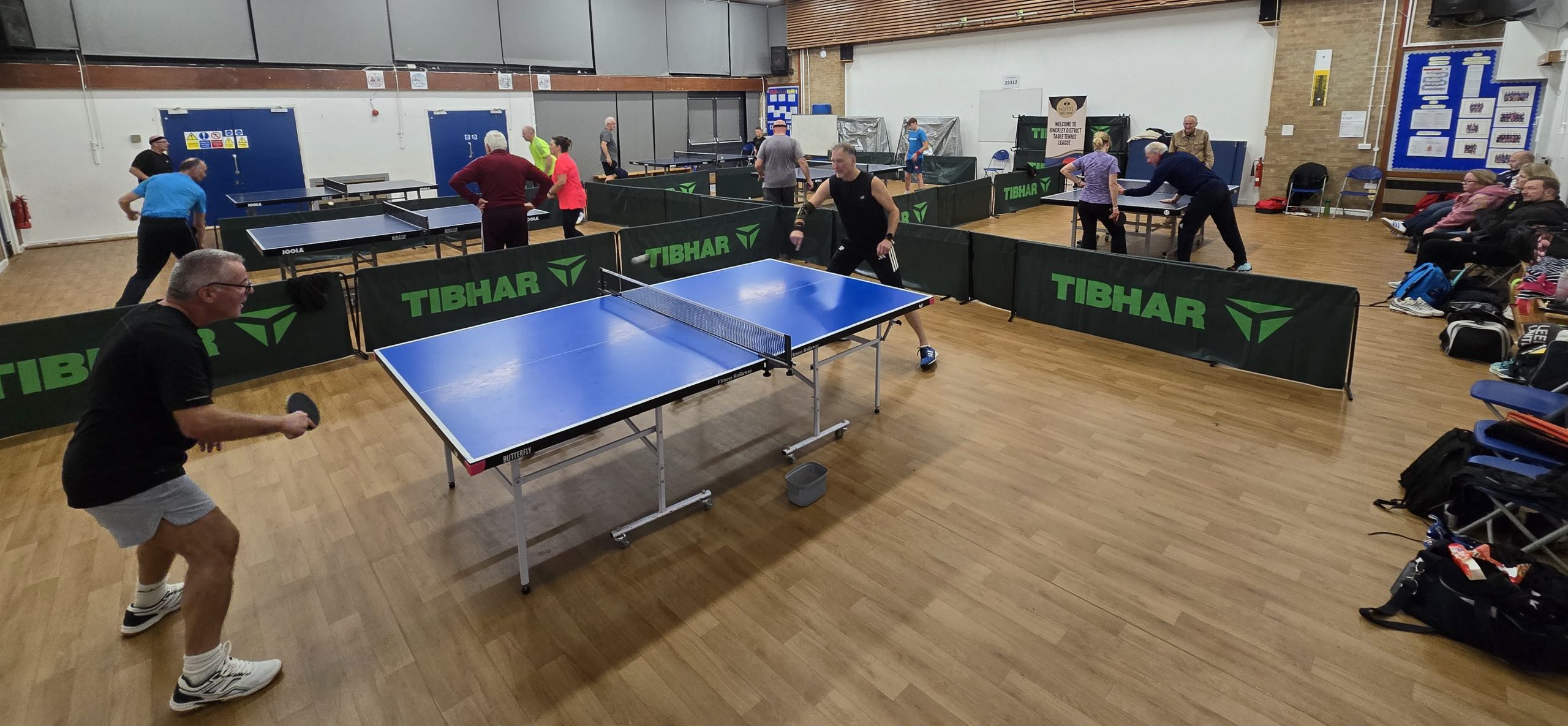
On Tuesday 20 October, Aad visited a coaching session organised by the Hinckley & District Table Tennis League. Previous visits have focused on club set-ups, so this one was different: the session was run by a league, which gave a new view of how coaching, participation and competition can connect at local level. The evening at St Martin’s in Stoke Golding brought together mainly adult players and two 12-year-old juniors. Six tables were in use on a good playing floor, with a register recording names, arrival times and signatures. The session ran from approximately 6.30 pm to 9.00 pm and cost £5 per player.
What stood out most was the volunteer spirit. Nick Rayner was effectively running and coaching the session, supported by John Bedford, yet Nick still paid the same £5 fee as the players. That small detail said a great deal: this was grassroots table tennis, sustained by people who contribute their time, energy and knowledge because they care about the game.
Aad worked with juniors Jacob and Samuel through multi-ball practice. Together they practised forehand and backhand movement patterns, switching from the backhand side, opening against backspin and recognising third-ball and fifth-ball adaptations. The boys had heard some of these terms before, but the practical meaning was not yet clear. Their next step is to link strokes rather than practise each skill in isolation, then carry those patterns into rallies and match situations. After the multi-ball work, they joined some doubles play.
Aad said “Across my visits, I have met coaches who are strongly against leagues, coaches who actively support them, and every view in between. The danger is allowing a fixed opinion about a pathway to take priority over the individual. Coaching should be player- or athlete-centred: decisions must be made for the player’s benefit.”
He explained a balanced approach to leagues is needed, and it requires careful consideration. Late nights can put players off, particularly young ones. On the other hand, league play can support development by providing match experience, regular competition, responsibility, different opponents, advice from more experienced players and a strong sense of belonging. If league play suits a player’s needs and supports their development, they could be encouraged to take part. If the demands would be too much, or another route would be more suitable, then league participation may not be the right choice at that time. Alternatives might include the tournament circuit—although that brings its own costs—or British Clubs League competition at youth, senior or women’s level. The question is not whether leagues are universally good or bad. It is whether a particular opportunity is appropriate for a particular player, at a particular stage.
Hinckley offers a practical example of how the late-night concern can be managed. Nick explained that league matches are sometimes played on two tables, and that the doubles come at the end of the match, so a junior may not need to play in them. Where possible, the league also tries to let juniors play in the games that finish first on the playing list. These are small adjustments, but they help young players take part in league play without being kept up unnecessarily late.
The Hinckley visit showed the value of keeping that judgement grounded in reality. Leagues generally provide opportunities for regular competitive play, but not every league also offers players access to coaching. That is what made Hinckley different: this volunteer-led, league-run session combined affordable practice and coaching contact with a route into competition, and the league adapted its arrangements for juniors. With clear development goals and thoughtful support, this kind of league environment can form a valuable part of a wider player pathway.
The question for coaches is what their local league offers, and whether it suits the player in front of them.
Latest news
Got a story to share?
Send us news from your club, league or school and we may feature it here.