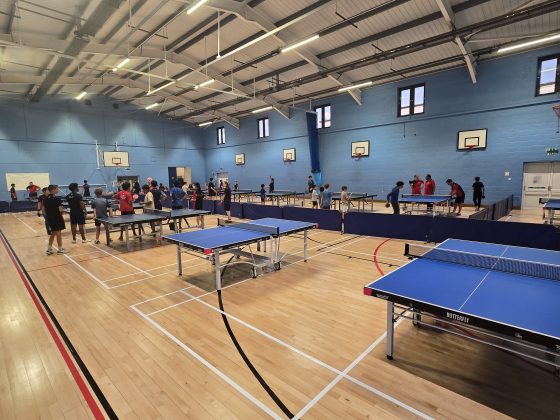
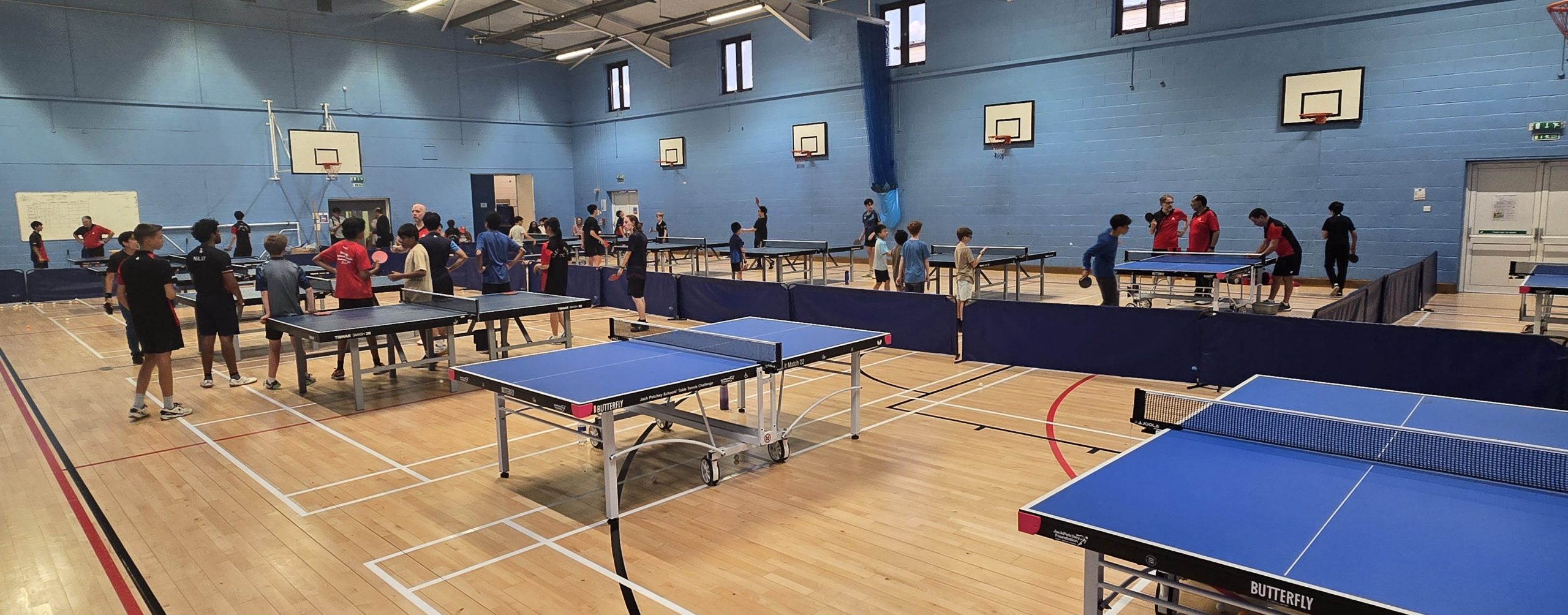
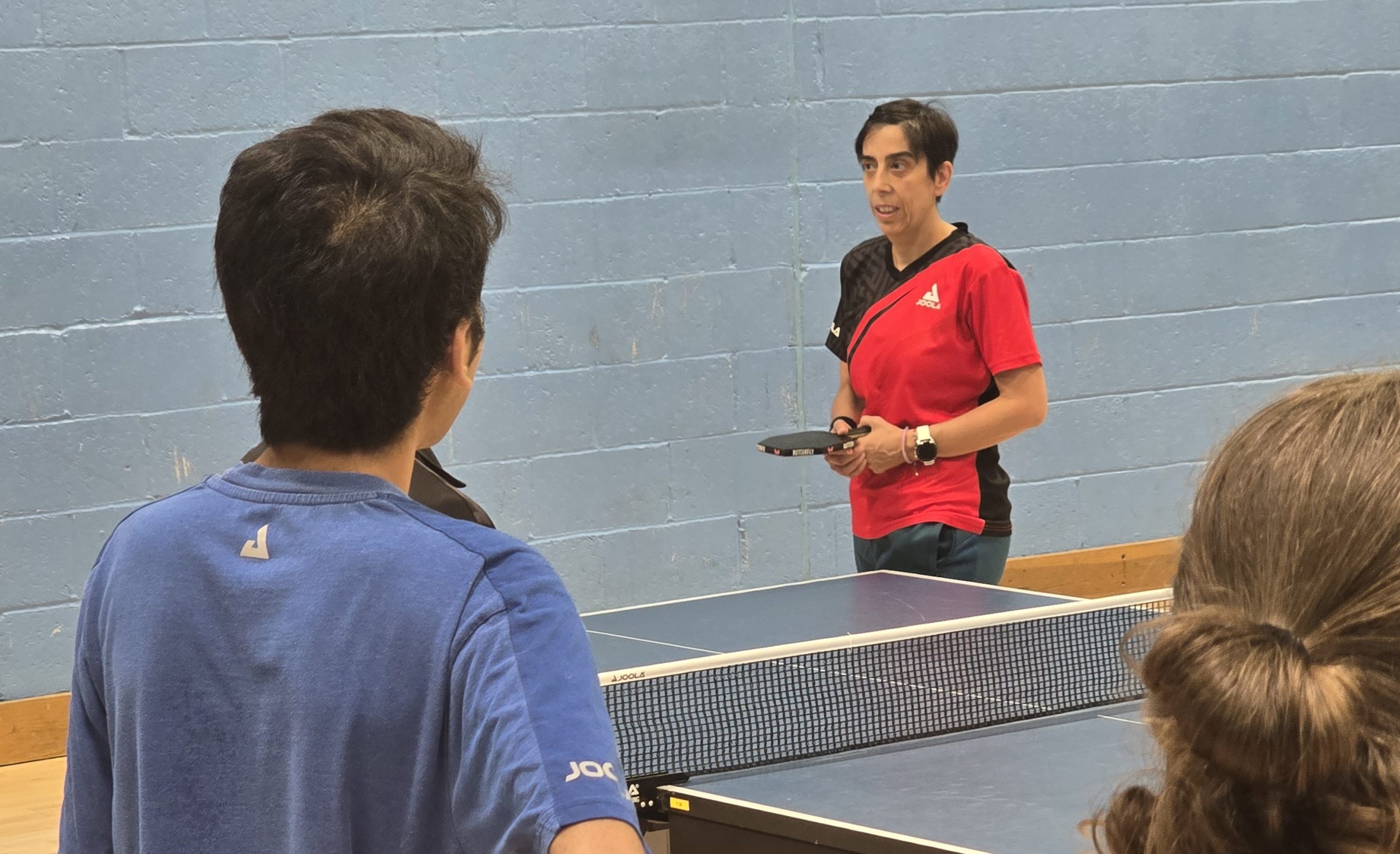
When you walk into Cleeve Park TTC on a busy junior night, the hall feels alive: tables in full use, multi-ball in one corner, beginners laughing through a cup pyramid challenge, advanced players working through purposeful drills. In the middle of it all, moving calmly and confidently between groups, is Rita Lopes – a coach whose influence is felt long before it is seen.
Rita does not seek attention. Her leadership is quiet, steady and deeply rooted in care for the players and the coaching team around her. Yet her presence shapes the rhythm and cohesion of the entire hall. It is this understated strength, combined with a rich personal story, that makes her an exceptional figure at Cleeve Park TTC.
A sporting childhood in Portugal
Rita’s journey into table tennis began in Portugal, long before she imagined coaching in a busy Sidcup sports hall. Her father, originally not a player, learned to coach so he could support Rita’s older brother. With few girls in the club, Rita spent her early years picking up balls, travelling to tournaments every weekend and absorbing the rhythms of the sport.
Her mother, a primary school teacher, also played a role — introducing table tennis to her pupils and helping create a family culture where sport, learning and community blended naturally.
“It was a family thing,” Rita recalls. “We never spent a weekend at home.”
Her father became an exceptional multi-ball feeder and Rita grew up under his mentorship. He taught her not only technique, but how to see “the person behind the player” — a philosophy that still defines her coaching today. By her early twenties, Rita was competing regularly, representing her university and travelling across Portugal. But a severe shoulder injury forced her to stop. She packed away her bat, unable to play for nearly twenty years.
Returning to the sport and finding a community
Rita’s return to table tennis happened in the UK, during a period when she was between jobs. Her husband encouraged her to try playing again, despite her worries about the old injury. She went to a local session, played for two hours and rediscovered the joy she thought she had lost. She has not stopped since.
Today, Rita is an active veterans player and a central figure at Cleeve Park TTC. Her professional background – a chemical engineer working in manufacturing – has shaped her coaching in ways she didn’t initially recognise. Years of managing people, organising processes and problem solving translate naturally into her coaching style: structured, calm, observant and quietly influential.
“I like the connection with the kids,” she says. “I like seeing them grow, being better in whatever they do.”
A hall that works because the coaches work together
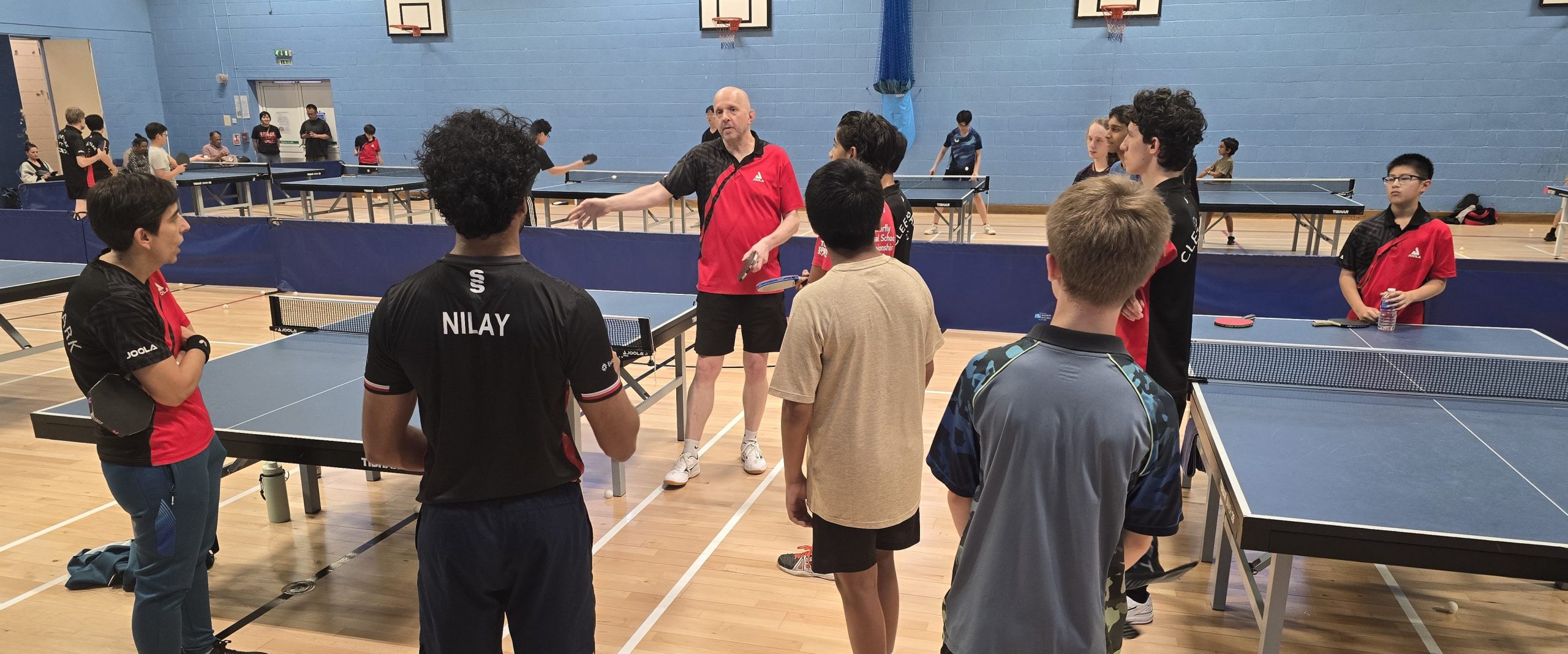
Cleeve Park TTC runs three junior groups simultaneously – beginners, intermediates and advanced – all in the same hall. It is a complex environment, but it works because the coaches work together.
Rita co-leads the advanced group with Phil Cox and Hurey Ahmetoglu, both full-time coaches whose professional coaching background compliments her own experience. Graham Windram delivers continuous multi-ball, adding intensity and variety. Steve Fuller leads the intermediate group with a thoughtful intake process, inviting players from the waiting list for trial sessions. Baljinder Sembhi brings creativity and patience to the beginners. Additional support comes from Chris Egginton and Chris Bartram, alongside practice partners and several experienced players.
What stands out is Rita’s whole hall awareness. Even while coaching the advanced group, she keeps an eye on beginners and intermediates, stepping in when needed and supporting fellow coaches.
“I don’t consider myself the head coach,” she says. “We help each other. That’s the beauty of Cleeve Park.”
Player development: progression, consistency and limited time
Progression at Cleeve Park is carefully managed. Beginners move to intermediate when basic coordination and control are established. The step from intermediate to advanced is more challenging – requiring consistency, discipline and exposure to structured drills.
Rita is clear about the biggest barrier: time. With only one and a half hour sessions twice a week, players simply do not get enough hours on the table to progress at the rate she knows is possible. When she was young, she trained every day for two hours. Cleeve Park does what it can but the constraints of hall availability remain.
Despite this, the club creates a motivating environment. Advanced players rotate partners, practice with experienced adults and finish sessions with competitive activities like fastest serve challenges. Rita plays with them regularly, offering both technical guidance and a role model for commitment.
Competition pathways: opportunities and barriers
One topic Rita speaks passionately about is competition access. “You don’t need ranking points to be a good player,” she says. “Our kids have the level. They deserve the opportunity.”
Cleeve Park’s junior team was placed on the Youth British Clubs League waiting list this year and Rita is actively exploring ways to support players through local competitions, sponsorship and guidance.
Her perspective is shaped by her own upbringing, where her club in Portugal secured sponsorships so players never had to pay for equipment or travel. She recognises that this model is rare today, but believes more can be done to support young players who show commitment and potential.
Coaching ambitions, giving back and a personal loss
Rita holds a current Coaching Assistant qualification and wants to progress further. She is particularly interested in SEND coaching and supporting neurodiverse players, inspired by a young player at Cleeve Park who has flourished within the club’s inclusive environment.
Her connection to Cleeve Park is also deeply personal. Her father, who coached her throughout her childhood in Portugal, passed away recently. Returning to the hall was difficult, but the Cleeve Park community supported her with warmth and understanding.
“My table tennis family was waiting for me,” she said. “It reminded me how much this club means to me.”
Rita may not see herself as a leader, but her influence is woven through every part of Cleeve Park TTC: the structure, the atmosphere, the progression pathway, the care for players and the cohesion of the coaching team. She employs many qualities that the coaching community within England can be proud of, giving her time generously, supporting others instinctively and bringing a lifetime of experience to the hall.
How can you become a coach?
Table Tennis England’s role-based pathway of three distinct qualifications is supplemented by a multitude of CPD opportunities for coaches, making it easier for coaches to continue to develop themselves in order to develop their players. The first step on the pathway is Coaching Assistant, find out more about book on a course below.
To see all of our available qualifications and CPDs, click here.
Latest news