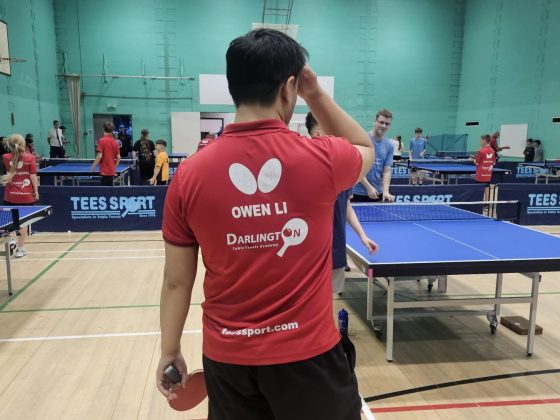
Table Tennis England Coach Developer, Steve Brunskill, recently spent time at Darlington Table Tennis Academy, where he met the head coach, Owen Li. Find out about Owen’s journey into coaching, his motivations and how he got to where he is today.
Owen got into table tennis through his first coach, Noel Chipman, of Fastbats TTC. The journey began in Bradford, West Yorkshire, when Owen was 11 years old. Noel came to the school to deliver table tennis sessions during a PE lesson. Noel then invited Owen to start training in the evening sessions at Fastbats.
After a few years, the local sessions stopped but the head of the club, David Adams, was extremely kind and gave up lots of time, energy and money to keeping Owen in the sport by taking him to local league matches in the Keighley and Bradford Table Tennis League.
Owen went to the University of York and Lancaster University where he was involved in table tennis there. Competing in the teams, attending training sessions and getting involved in the committees at each university. Eventually, Owen moved to Darlington and was welcomed into Darlington Table Tennis Academy (DTTA) – that’s where his coaching journey began.
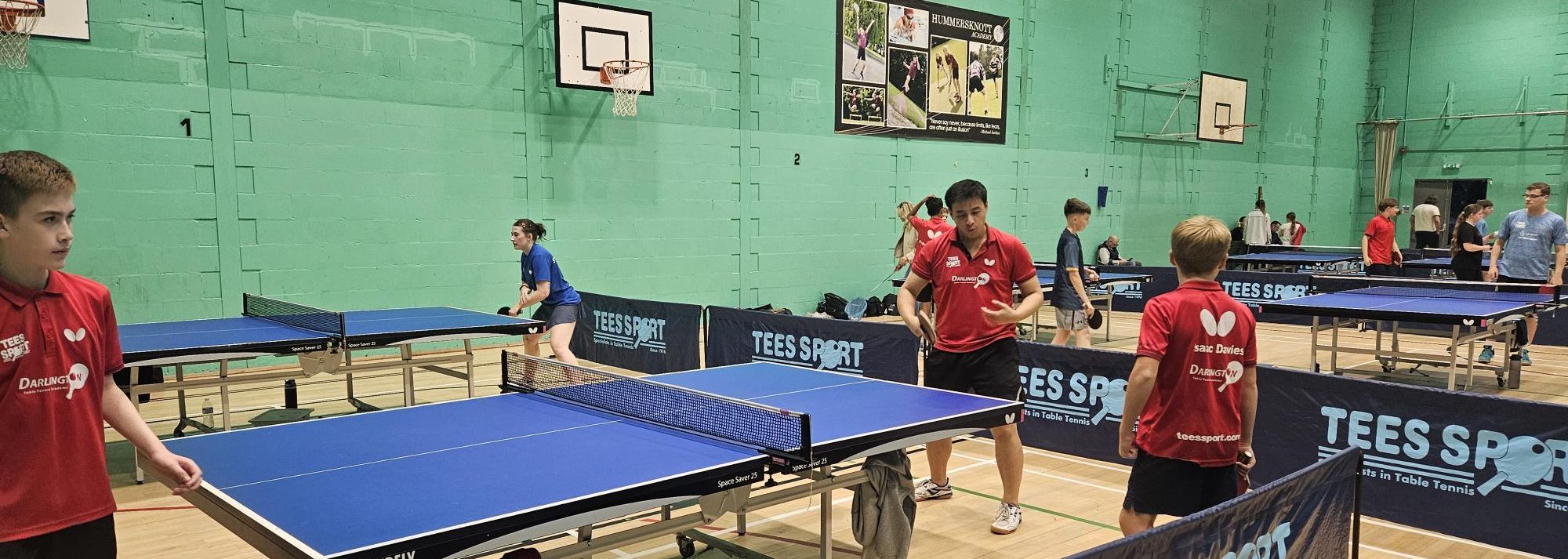
Owen remarked on how DTTA fosters an amazing community of both players and volunteers, offering the space for kids to train and improve whilst also investing in the coaches and offering them opportunities to improve and, as a result, bettering the kids and the environment.
Owen initially started taking over one of the coaching nights at DTTA and really wanted to make an impact on the kids and do something worthwhile. With the support of Giulio Pontone, Secretary of DTTA and Steve Brunskill, Table Tennis England Coach Development Officer, Owen decided to take on the role of Head Coach at the club.
“Both Giulio and Steve have been immensely supportive of me taking this position” remarked Owen. “Offering guidance and support through my journey as Head Coach, particularly as I get very excited about implementing new initiatives in the club and look to continuously improve and expand.”
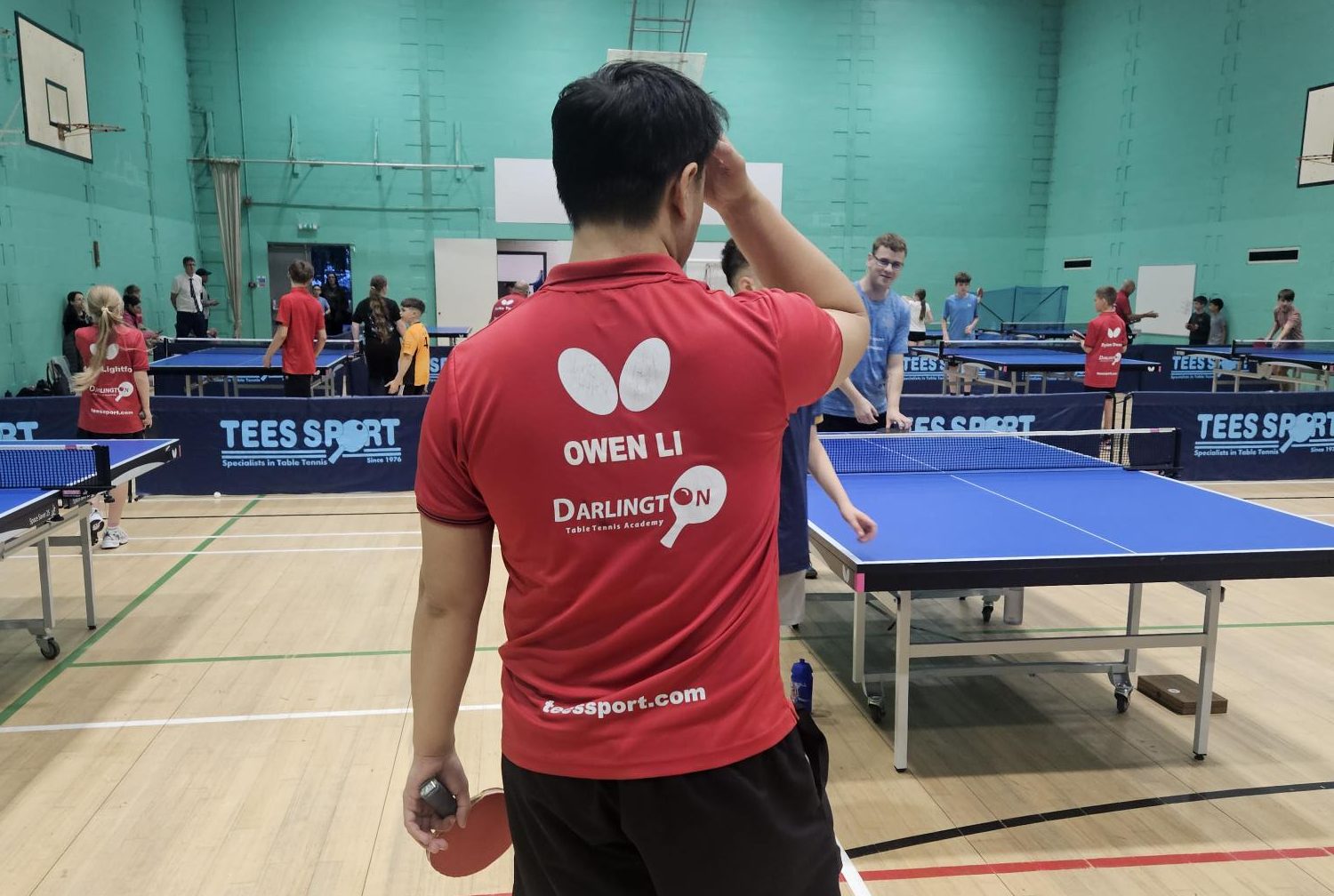
Owen is currently taking the ‘Coach’ qualification and is looking forward to the course as he feels it’s evident that Table Tennis England are putting in a lot of effort and time into developing good quality coaches. Owen intends to learn as much as possible to become a better coach, to learn to effectively analyse, reflect, and implement training procedures which align with each of his player’s goals and aspirations, helping them to keep progressing.
“Table tennis is an amazing sport, capable of being played by anyone, and an incredible outlet to provide every player with important life lessons and future opportunities. Through playing table tennis, one learns to deal with adversity, to build up resilience, and is an outlet to consistently dedicate your effort and time to make long-term improvements. These are invaluable skills, particularly for the younger generation for today. And so, it is a real privilege to be able to give that to each of our players and to work on ensuring the club maintains that safe learning environment”.
Owen’s main goal for the club is to develop to the point where the club functions as an environment that produces strong elite players, whilst also maintaining the community connections of a grassroots club, where players can come in as complete beginners and progress all the way to elite level.
Owen’s top coaching exercises:
Three-point forehand –
Playing 1/2 (your choice) forehands from the wide forehand side, next playing forehand from the middle, playing the forehand from the backhand side, and then either playing forehand again from the middle or advancing the drill and going straight back to the wide forehand side and repeating.
“I think this is an amazing drill for a warm-up as it allows a player to focus on warming up the legs and hips, particularly working on shifting the body weight, recovering, and moving.”
Middle either corner –
First ball being played to the middle and then the next ball is played wide anywhere, either to the backhand or the forehand side.
“This drill adds the element of unpredictability and randomness, just like in a match situation, and is good to practice being able to help with movement, footwork, anticipation, and recovery.”
Take your coaching to the next level
Coaching membership brings you even more support than ever before, helping you develop as a coach and therefore develop your players further. One benefit of membership is free CPD, so sign up and check out what’s coming up in the coming weeks.
Latest news