When Ian Langton was in hospital for months on end, unable to walk, he never could have envisaged returning to his beloved table tennis.
A local league player in Preston since the age of 12, the sport was always a big part of his life.
Everything changed at the start of the Covid pandemic in April 2020. Ian, who was 52 at the time, spent two weeks in bed with the virus and, when he got up, had cold feet and pins and needles.
He put it down to his circulation having been poor while in bed – but it turned out he had developed Guillain- Barré Syndrome, a rare condition in which the immune system attacks the central nervous system.
What happened over the coming weeks, months and years took him on a physical, mental and emotional rollercoaster and challenged him every single day.
We talked to Ian about how playing table tennis brought him hope during his recovery and then took him on a journey back to his local league.
“I went from being active to being unable to walk, hold a pen, open a packet of crisps, dress myself or look after myself,” says Ian.
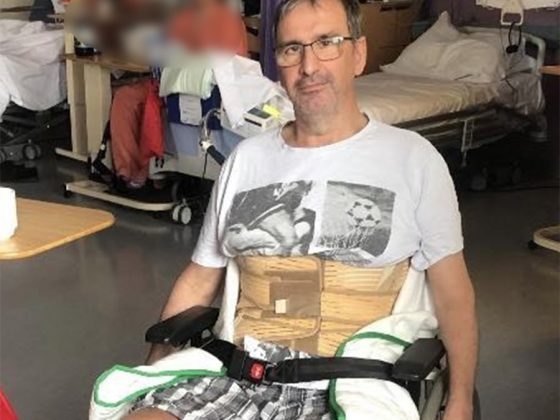
“I spent four months in Preston Hospital, and another four months in a neurological care centre. During those eight months, I had to begin learning how to do things again for myself: getting dressed, getting myself washed, getting myself out of bed into a wheelchair, getting out of the wheelchair into a normal chair.
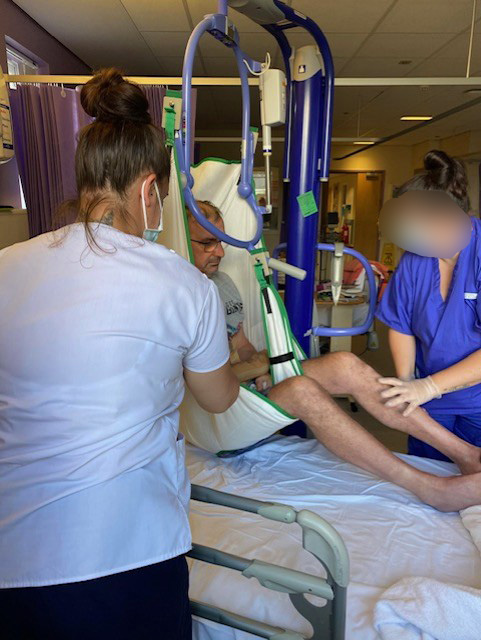
“The care home got me up and about, walking with the aid of walking splints and three physiotherapists holding me up and keeping me in the right direction.
“I came home two days before Christmas 2020. At that stage, I was unable to go outside because I physically couldn’t get out on my own. I could walk the length of the living room using a frame, but that was about it.
“Within about six months, through a lot of hard work and physiotherapy, I was able to walk about with two sticks or one of those trolleys with wheels and a seat and brakes on the handlebars.”
Ian admits his mental health was not great around this time – he was stuck in the house and was made redundant from his job as a warehouse transport manager.
Getting a Motability car with hand controls gave him some independence and that was an important factor in what happened next.
Joining a variety of local clubs, just to get out of the house, he tried out a disability golf group. There, he met Keith McIntosh, a local charity worker, who mentioned that he ran a table tennis session for people with dementia and another for people with Parkinson’s.
Ian says: “The words ‘table tennis’ immediately caught my attention and he said ‘you should come down and give it a go’. He said they were always looking for helpers.
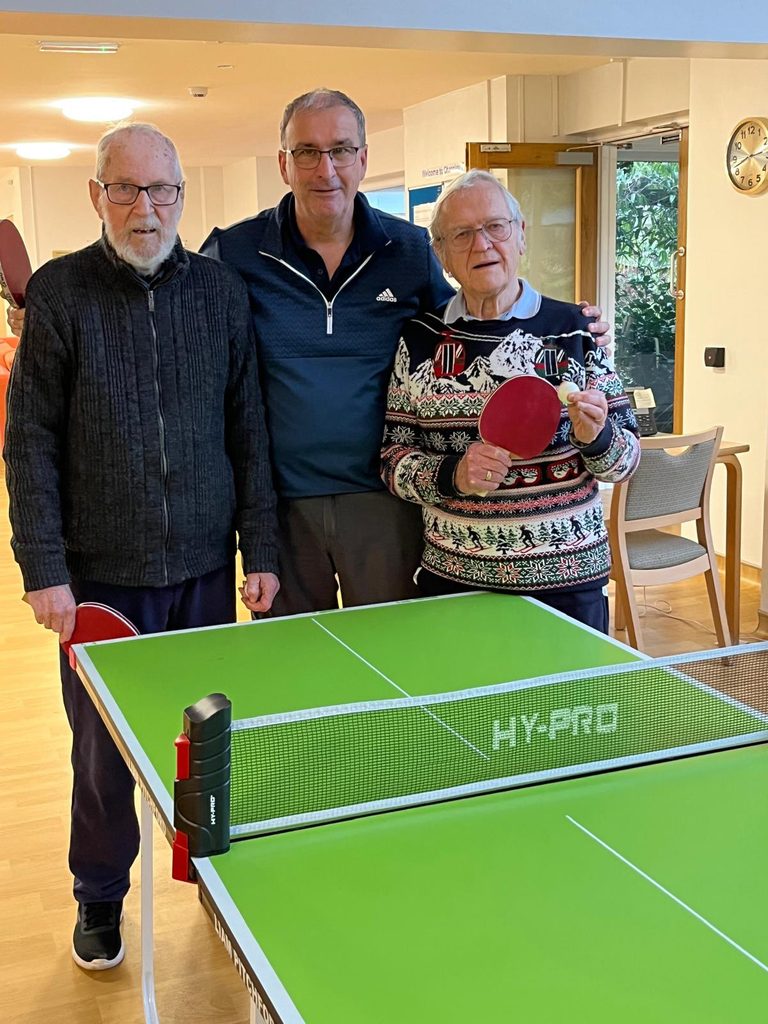
“At that stage, I was very unsteady on my feet. But the standard of table tennis I used to play was of a reasonable standard, so in my head I was good enough to go and bat a ball back to somebody who’s got Parkinson’s or dementia.
“And, I thought: ‘It’s table tennis, I’ve played it for 40 years and I might be able to play again’ – and I’d not felt like that for three or four years.”
It was at one of the Parkinson’s sessions that Ian met Jim Higham, a player he had known through the Preston League for many years, and that took his recovery to the next level.
“We began practising together, playing forehand to forehand and backhand to backhand,” says Ian. “I still could not move from side to side, and I can’t do so properly now. I can’t run or jump because of the damage to my nervous system, and I still can’t feel my feet properly.
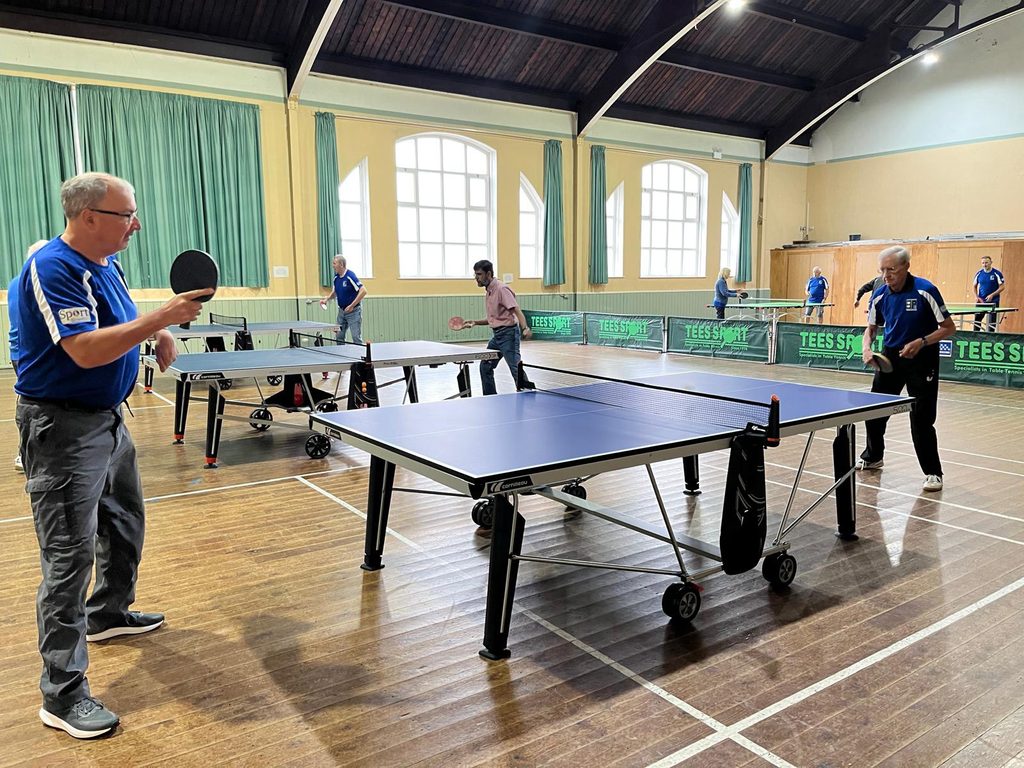
“But I could move forwards and backwards, reach the ball and I got to be playing shots again. And through that, I got the confidence to play properly. Me and Jim would play a couple of sets every time we met up.”
With confidence growing, Ian asked Jim whether he thought he would cope in the bottom division of the local league – and was encouraged by the reply.
He contacted his old team captain and it was suggested he tried playing in the summer league, where flexible formats allowed him to play as much or as little as he felt he could, for any team which might need him.
“I went along at the start of the summer league last year,” said Ian. “I played against a gentleman I didn’t know and he had pimples on one side and I thought ‘that’s all I need!’ But they put me against him, and I beat him 3-1.
“Over the course of the league I got to play most weeks for about seven or eight weeks. And to be fair, it hurt me. I suffered for it the day after, because fatigue is a killer for me. But I did it.
“And then I said I was thinking of playing winter league, but in division two, the bottom division. So I signed up to play for Astra C.
“And lo and behold, I went the whole of last season unbeaten in division two, so I was very happy with that. It’s more than what I expected by any stretch.
“Some of the old timers who I’d played six years previously, I expected them to beat me because we played against each other and they knew how to play me, but my movement was now compromised. And I expected the youngsters just to blast me off the table and move me about, knowing I couldn’t move.
“But with my long arms and my experience, and my table tennis brain – I just chopped them all off the table.
“This year I’ve gone back to my own club, Deepdale Lyons. They didn’t have a team in division two, so I had to go somewhere else, but I’ve come back to my own club, where I learned to play when I was 12 – so I’m playing in Division One this year with my old team-mates.”
He has had plenty of success, too, with his record at the time of writing standing at 25 games won and 21 lost across four team matches.
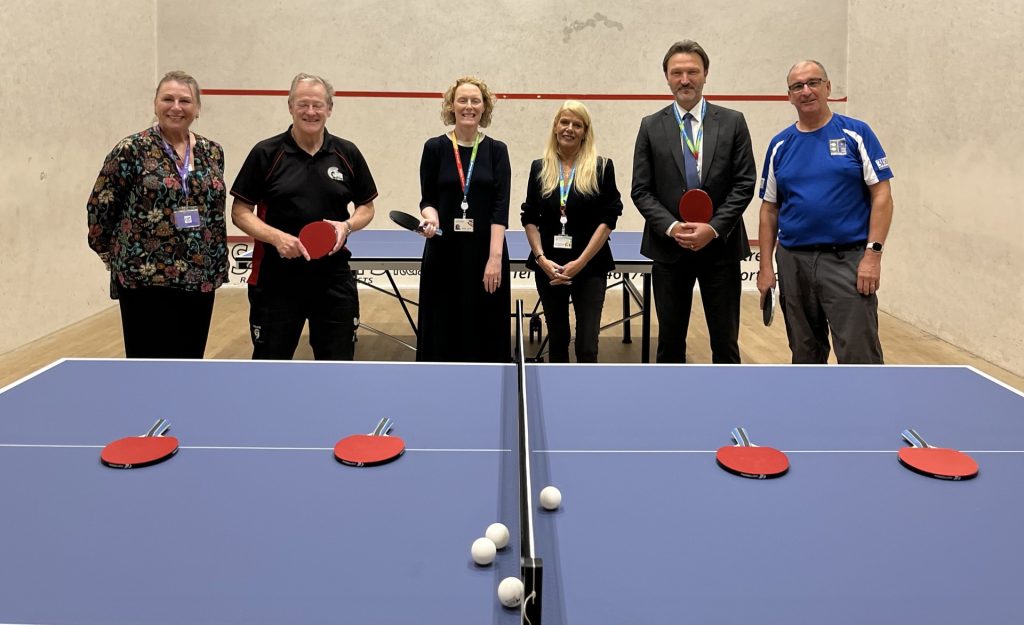
Ian, now aged 59, says his wife Pat and grown-up children Kayliegh and Christopher have given him brilliant support – and a first grandchild, Theo, arrived five years ago to give him a further boost.
But the biggest lift to his physical and mental health has been the return to the sport he loves.
“I’m happy I’m playing table tennis again,” he says. “I don’t think I’m at the standard where I was because I physically cannot move side to side, and I can’t play doubles. From a movement point of view, I’m not there yet and I don’t think I’ll ever be there. But from a table tennis point of view, first and foremost, I’m enjoying it.
“Obviously you want to win and you play to win but even if I get beat, there’s bigger things going on in my head.
“I’ve laid in a bed for eight months not being able to sit up. So, every time I play table tennis, even when somebody gets a net or an edge and beats me, it doesn’t make any difference.
“It’s enjoying it, you know? And that’s what it’s all about for me.”