From representing Wales on the international stage to helping develop the next generation of table tennis talent, Dan O’Connell’s journey has been shaped by a lifelong passion for the sport. Now a Table Tennis England Coach Mentor, Dan reflects on his transition from player to coach, the importance of understanding each individual, and why helping others discover their potential is hugely rewarding.
For Dan, a journey that would eventually see him represent his country on the international stage began with a simple introduction to table tennis from his grandfather at the age of just seven. Dan soon spent four or five days a week on the table developing his passion for the sport. His competitive journey began to gather momentum, with one of his first standout memories coming from the British Primary Schools Team Championships in Guernsey, where he experienced the thrill of winning as part of a team.
“It really gave me the bug for competing,” he explained. “It was nice to win it as a team because table tennis is predominantly an individual sport, but I’ve always preferred playing in team events.”
Dan joins the Coach Mentor team with a wealth of competitive experience – attending the 2011 World Table Tennis Championships in Rotterdam offered a valuable insight into the demands of elite-level table tennis, giving him the opportunity to watch the world’s best players up close and understand their preparation, training and dedication. A career highlight followed as Dan represented Wales at the Glasgow 2014 Commonwealth Games. Among his proudest achievements was reaching number one in Wales, providing a fitting reward for the years of travelling, training and commitment he had dedicated to the sport.
“Playing for your country is the pinnacle in most, if not all, sports, so I feel truly lucky I was able to do it.”

Discovering a new passion: From player to coach
Having spent much of his early life developing as a player, Dan’s transition into coaching began gradually at around the age of 23. Initially taking on a few hours of coaching each week to supplement his income, it didn’t take long for him to realise that he had discovered something he was equally passionate about. For him, one of the greatest rewards came from seeing the impact that even a small piece of advice or guidance could have on someone’s development. Now fully invested in coaching, Dan admits that the satisfaction of helping others develop has arguably surpassed the feeling he once got from improving as a player.
“I loved the feeling of being able to help somebody improve through something that you had said to them and seeing the joy they got from that.”
Taking his coaching experience onto the international stage
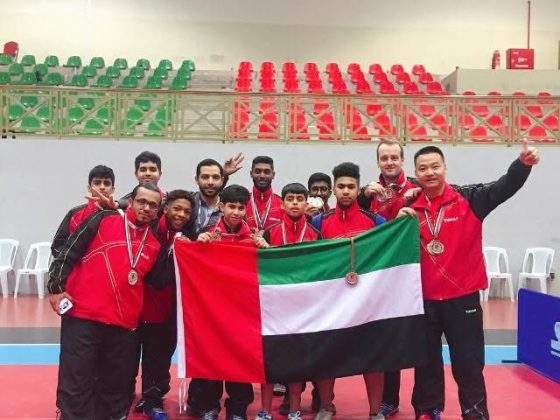
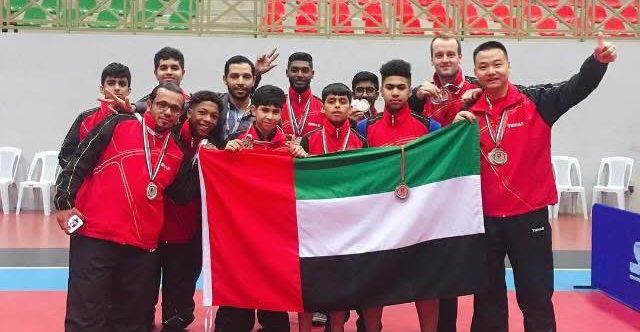
An opportunity to work overseas soon provided Dan with an entirely new challenge, as he took up the position of Assistant National Coach in the UAE. Having previously been coached by Li Chao from an early age in Wales, Dan was approached by his former coach, who was working as the UAE’s National Coach at the time, and offered the opportunity to join him. Despite being relatively early in his coaching career, Dan recognised the value of the experience and the opportunity to work within a different sporting culture. He also admits that the chance to live in Dubai was a welcome bonus!
Working within a national team environment brought a different level of responsibility, with greater emphasis placed on results and performance. For Dan, this accelerated his development as a coach, teaching him how to manage the pressures of elite sport while continuing to recognise the individual needs of each player. It was an experience that brought success too, with the UAE Under-21 team claiming gold in the team event at the West Asia Championships for the first time.
Reflecting on that chapter, Dan recognises just how fortunate he was to gain such valuable experience so early in his coaching journey. Being exposed to different approaches, working alongside experienced coaches, and understanding the demands of international competition helped shape his coaching philosophy and reinforced the importance of never stopping learning.
Now based in the North West of England, Dan’s coaching career continues to take him across a variety of environments, working with players of all ages and abilities at clubs throughout Lancashire and Cumbria. From one-to-one coaching to group sessions, his current commitments offer plenty of variety, something he believes is one of the most enjoyable aspects of the job.
Having recently started running the junior sessions at Hilton Table Tennis Club in Bolton, Dan particularly enjoys introducing new players to the sport, helping them discover their passion. Alongside his community coaching, he also works with some of the North West’s highest-ranked young players. More recently, he’s begun working with the Hopes Squad in Sheffield, while also taking on his new responsibilities as a Table Tennis England Coach Mentor.
It’s a busy schedule, but one that Dan wouldn’t change – “When you enjoy what you’re doing it never really feels like work!”
Giving back through the Coach Mentor programme
Having spent time working alongside a variety of coaches throughout his career, Dan had already experienced the value of sharing knowledge and supporting others before applying for the Coach Mentor role. He recalls occasions where coaches and club organisers would approach him for advice. Seeing how much those conversations could help others encouraged him to take that support a step further when the opportunity to become a Coach Mentor arose.
The role also provides an opportunity to connect with coaches across the North West whom he might not otherwise have had the chance to work with. Having benefited from some fantastic experiences himself, Dan is keen to help other coaches discover similar opportunities and develop their own coaching journeys.
“I’ve been fortunate to have some really positive experiences through coaching and hopefully I can help other coaches to experience the same.”
Dan believes his experiences of playing and coaching in different countries, combined with working with players across a wide range of abilities, give him a varied perspective to bring to the role. Importantly, he recognises that being a successful player and being an effective coach require different skill sets, and believes it’s the combination of those experiences that can help him support others.
Understanding the person behind the player
We asked Dan, what makes a good coach? His answer goes beyond technical knowledge, playing experience or the ability to deliver an effective training session. For him, it starts with understanding the individual. Having worked with players of different ages, abilities and personalities, Dan believes that taking the time to understand what someone wants from table tennis is fundamental to helping them develop.
Some players will be driven by the ambition to become the best they possibly can, while others may simply want to enjoy the sport, its social side and to stay active. Recognising those differences is what allows a coach to adapt their approach and get the best out of each individual. Communication is an obvious part of that process, but Dan believes it’s not simply about communicating well – it’s about understanding how best to communicate with the person in front of you.
Some players respond to direct feedback, while others benefit from a softer approach. Sometimes, he believes, knowing when not to say anything at all can be just as important. Dan also believes the influence of a coach can extend far beyond the table, particularly when working with younger players. Sport provides an opportunity to develop important life skills, teaching people how to deal with setbacks, overcome disappointment and understand that progress comes through patience, effort and consistency.
Why coaching is about more than results
One of the biggest motivations behind Dan’s continued involvement in coaching is the satisfaction of seeing someone achieve something they previously couldn’t. It’s a feeling that has only grown stronger since taking on the Coach Mentor role. Rather than working directly with just the player, Dan now has the opportunity to support the coach who is helping them develop. In turn, that coach can take what they’ve learned into their sessions, helping more players improve and enjoy their own journeys. It’s a simple way of explaining the wider impact of coach development and why having the right support around coaches can make such a difference to the sport.
“Now I’m in a position to help a coach help a player. So then hopefully the player improves and feels good, their coach feels good as a result, and then you get to share in that positive feeling too. So, everybody wins!”
His advice: Take the first step and embrace every opportunity
For anyone considering getting into coaching, Dan’s advice is straightforward: “If you’re considering getting into coaching, do it! The rewards on offer are huge and you can help other people enjoy the sport as much as we all do.”
For those just starting out, he encourages aspiring coaches to embrace as many opportunities as possible, particularly those that expose them to different environments and types of players. Working with a variety of people not only helps develop coaching skills, but also allows individuals to discover which aspects of coaching they enjoy most. Dan believes you don’t need an extensive playing background to become a great coach. While understanding the game is valuable, he points to qualities such as empathy, patience and the ability to relate to different people as equally important. His message is that being able to see things from a player’s perspective, understanding their needs and remembering that even the world’s best players started as beginners, are qualities that can make someone an excellent coach.
Helping coaches recognise their strengths
For the coaches who will work with Dan through the Coach Mentor programme, he hopes to provide an understanding and supportive environment where they feel comfortable discussing challenges, sharing experiences and identifying opportunities to improve.
He is keen to reinforce that no coach is ever the finished article, with development being a continuous process regardless of experience or ability. However, he also wants coaches to recognise what they’re already doing well. Dan believes it’s easy to become overly focused on areas that need improvement, sometimes overlooking the strengths and qualities that make someone an effective coach in the first place.
He wants coaches to leave their interactions with greater confidence in their abilities, as well as a clearer understanding of where they can continue to develop. He also sees huge value in the collaborative element of Table Tennis England’s coach development structure.
Alongside having a mentor available for ongoing support, the learning weekends in Sheffield bring coaches and mentors together to share experiences, discuss challenges and exchange ideas. With more than 30 coaches in the room, Dan believes the opportunity to learn from one another is invaluable. Some of the most useful elements of his own coaching practice have come from observing and speaking to other coaches, picking up ideas and approaches he may never have discovered working in isolation. For him, creating those connections and encouraging coaches to learn from one another is a vital part of developing the wider coaching community.
Ready to take your first step into coaching?
Whether you’re looking to become a Coaching Assistant, develop your coaching knowledge or take the next step in your coaching journey, Table Tennis England has a range of courses to help you get started. Explore upcoming coaching qualifications and courses through the TTE Hub.
Latest news
Got a story to share?
Send us news from your club, league or school and we may feature it here.