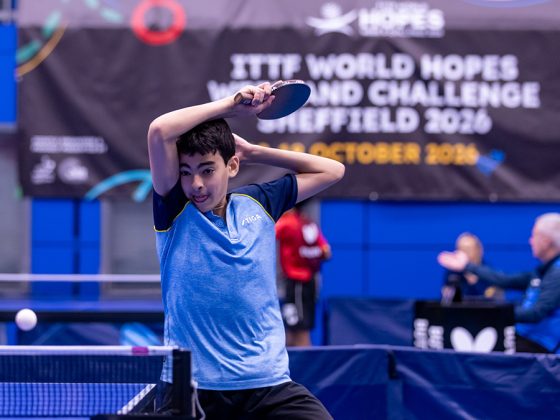
ITTF World Hopes Week was a win-win for everyone involved in the programme in Sheffield this year, from the players to the coaches to the ITTF itself.
EIS Sheffield hosted the week, which brings together some of the world’s best under-12 boys and girls, who have qualified via a continental pathway to take their places on the programme.
It was a chance to share best practice and participate in an elite training camp under the guidance of ITTF Head Coaches Eva Jeler of Australia and Nuria Castro of Spain, as well as have a first-class competitive opportunity in the two-day Challenge which rounded off the week.
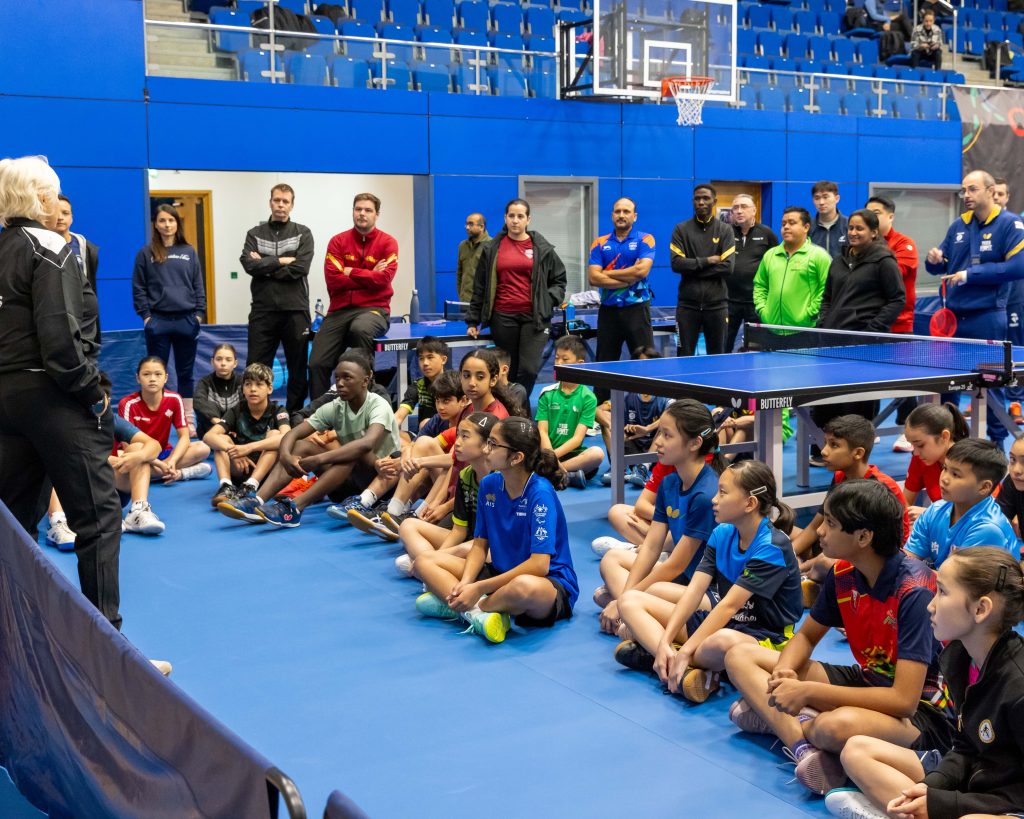
For coaches such as Ireland’s Conn Higgins and France’s Guillaume Simonon, it was an ideal environment in which both they and their young charges could thrive.
Guillaume said he had spent a couple of days at the week in Hennebont in France a few years ago, but had never before attended the full week.
“It’s very interesting to have some interaction with the head coach, of course, but also the coaches of the other countries. We can see that everywhere in the world we play very good table tennis, so we have to pick up ideas from everywhere.”
He said the opportunity for players and coaches to experience many different styles of opponent during the Challenge is also important, and added: “It’s a long competition, it’s a hard competition, so you can see some up and downs, and how they manage that is very interesting.
“The week was excellent. Everyone from England and from the ITTF are very nice with us, always helpful, and it was a pleasure to be there.”
Conn Higgins, whose player Ryan Li was part of the programme this year, having been invited in as a sparring partner last year, said: “Hopes Week is always a great week if you can come to it.
“The friendships that the kids make, but that the coaches also make, is really important. As well as the expertise from Nuria and from Eva, you have the expertise of all the other coaches.
“In the evening time, we’re sitting down and having a coffee, or maybe dinner, and we are exchanging ideas – what do you do in your country and what are the problems and how do you overcome them? So this knowledge is invaluable.”
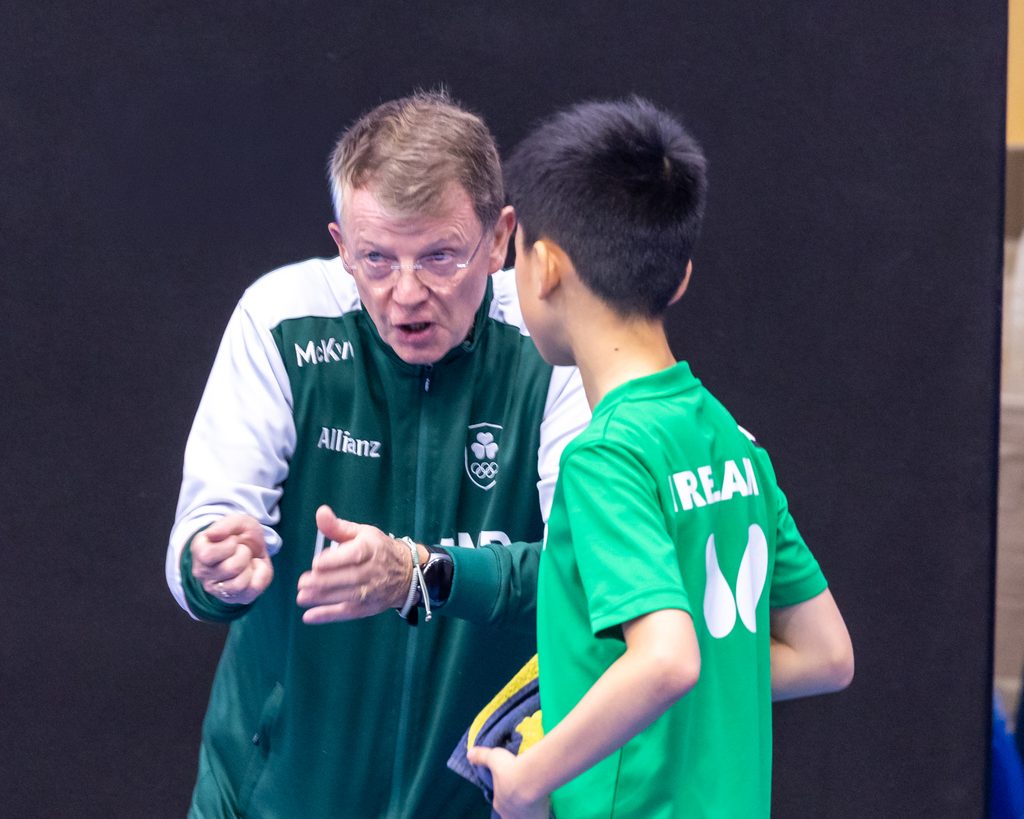
He agreed that experiencing different styles of play is also essential in young players’ development: “When you have 18 boys from 16 different countries, you have 16 different styles. You have long pimples, you have short pimples, you have so many different varieties. It’s really important for the kids to learn how to adapt your game.
“It’s like a game of chess: How do I outmanoeuvre my opponent now, because normally I don’t have to do this? So the learning from the different styles is crucial for me.
“The hopes week is really well run, well organised and I think people really enjoy it.”
ITTF Sports Development Director Mikael Andersson says World Hopes Week is not seen in isolation, with the qualifying route often including national, as well as continental, events – and players taking away development plans from the week.
“It is a development event, so it’s extremely important that the training and the learning procedures around matches and training are in place,” he said.
“I think the sporting environment is important for us, and this is a sport institute, and the young kids can see other sports going on, and Para athletes playing in national competitions. You’re surrounded by sport, and we like that. That’s been the upside to be here in Sheffield.
“We think it’s a platform for development, and from this point we have some support programmes that we put in place for some of the players that we see, and most of them can benefit from.
“Of course, they need to also to learn to be competitive and play competitions. We think the format that we’re using here is it’s good because we see both the physical skills and the mental skills (need) to be sharp all the time. You play many, many games in these two days, so we think it’s beneficial for everybody, both coaches and players.”